


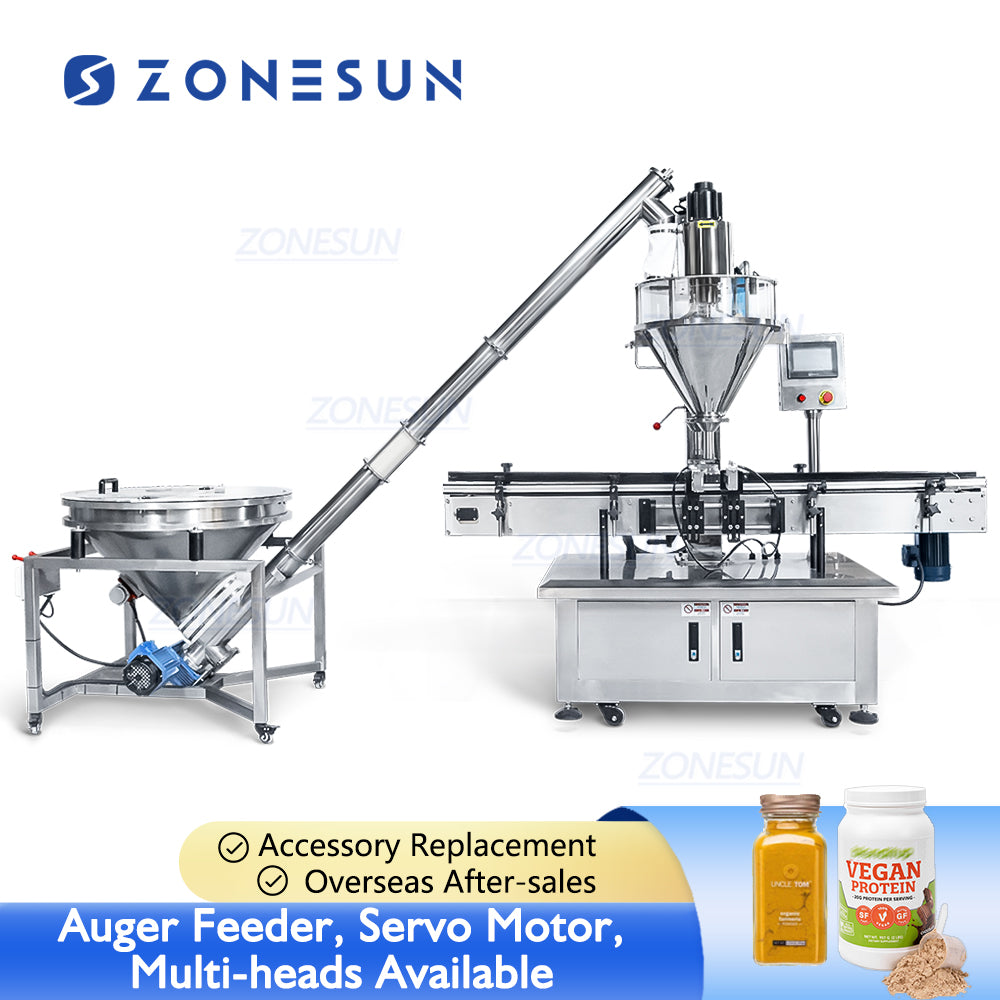
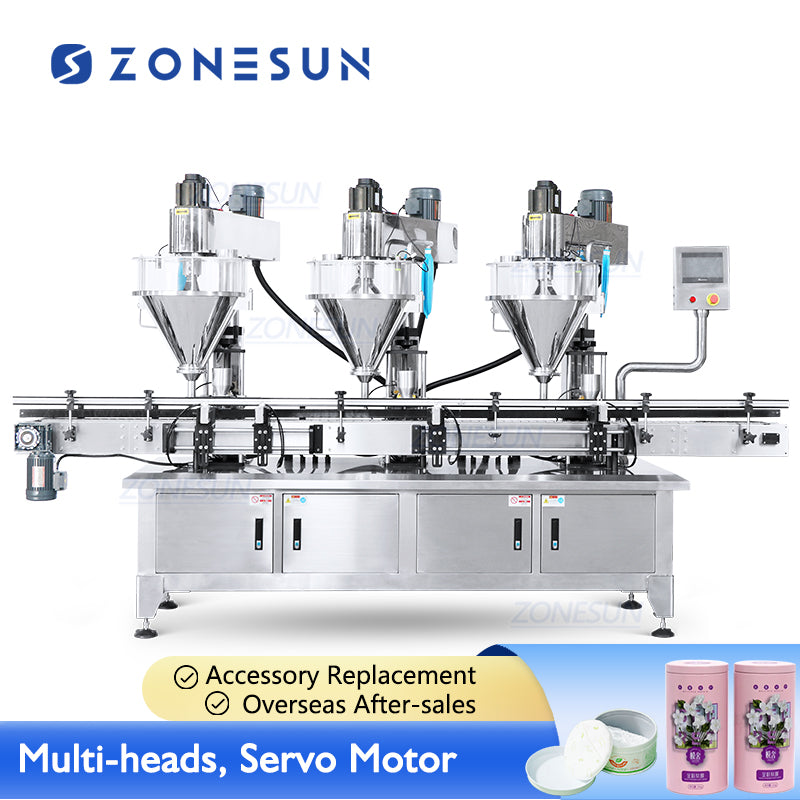
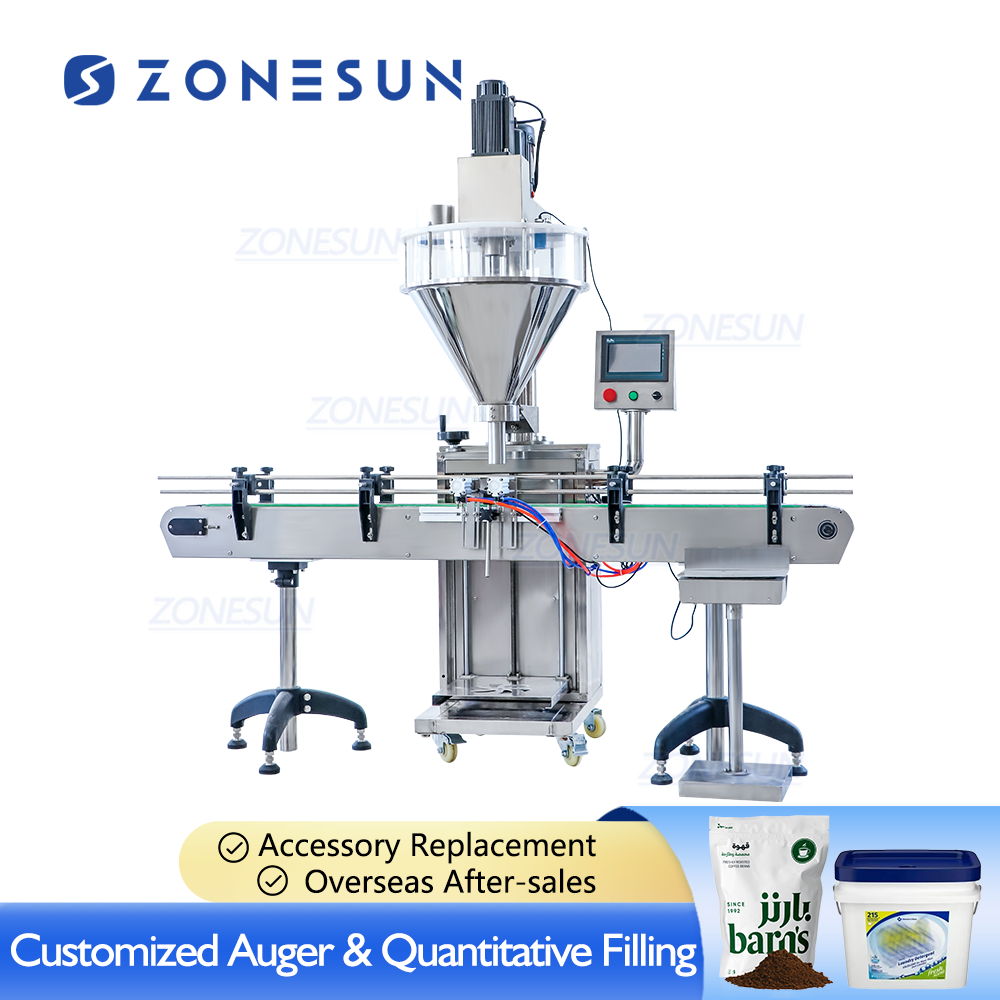
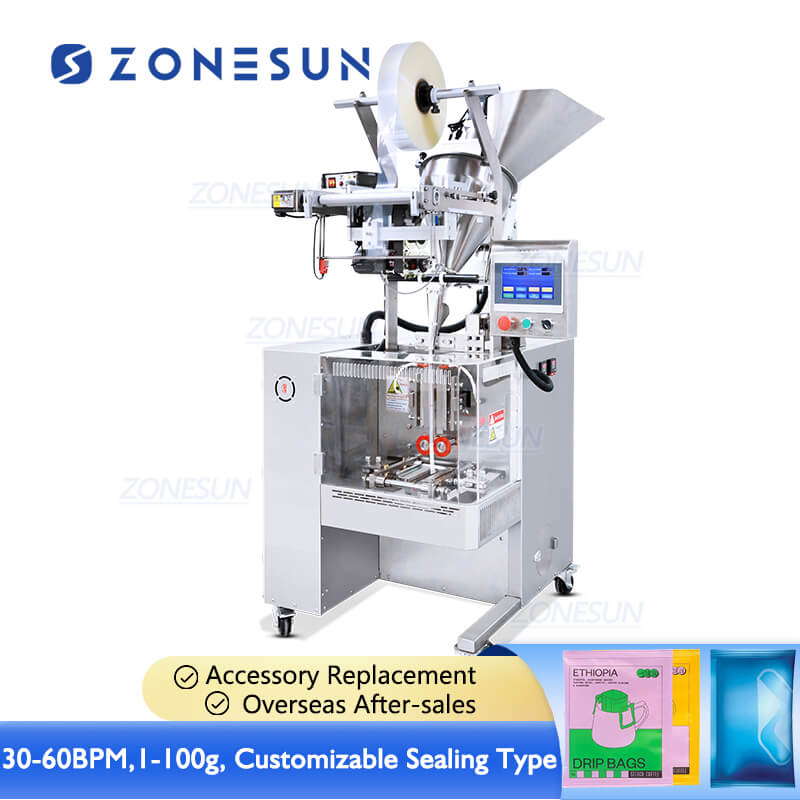
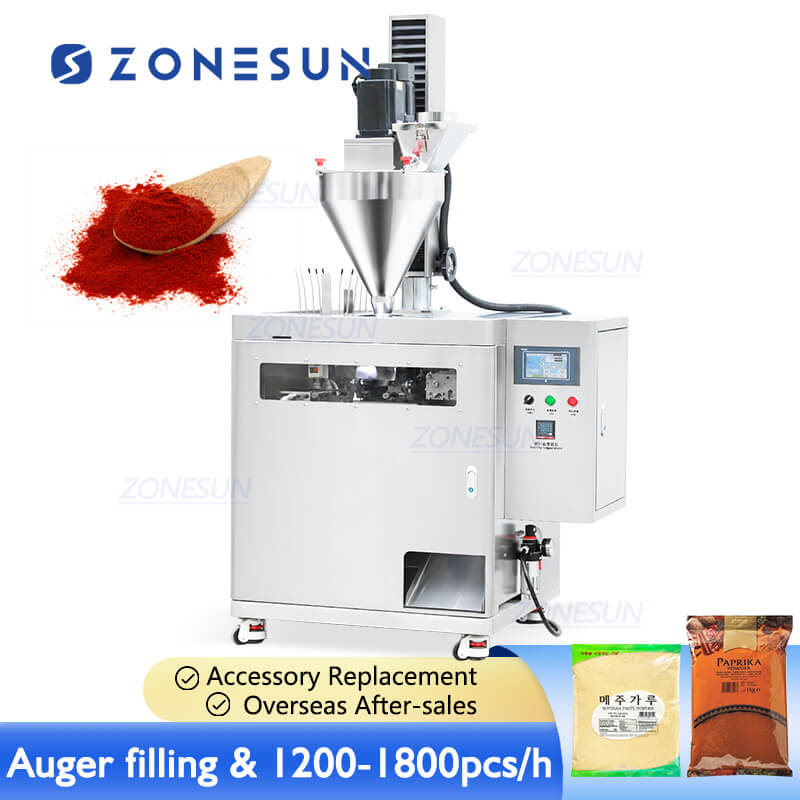
Powder filling machines are designed for measuring and filling powders or powder mixtures into bottles, jars, vials, cups, roll film sachets and premade pouches. ZONESUN offers semi-automatic powder filling machine, automatic powder filling machines and completed powder packaging line for different production needs. The machine can be customized according to the powder characteristics, filling weight, packaging type, required accuracy and production speed. Auger, weighing or volumetric cup dosing can be selected according to the actual product.


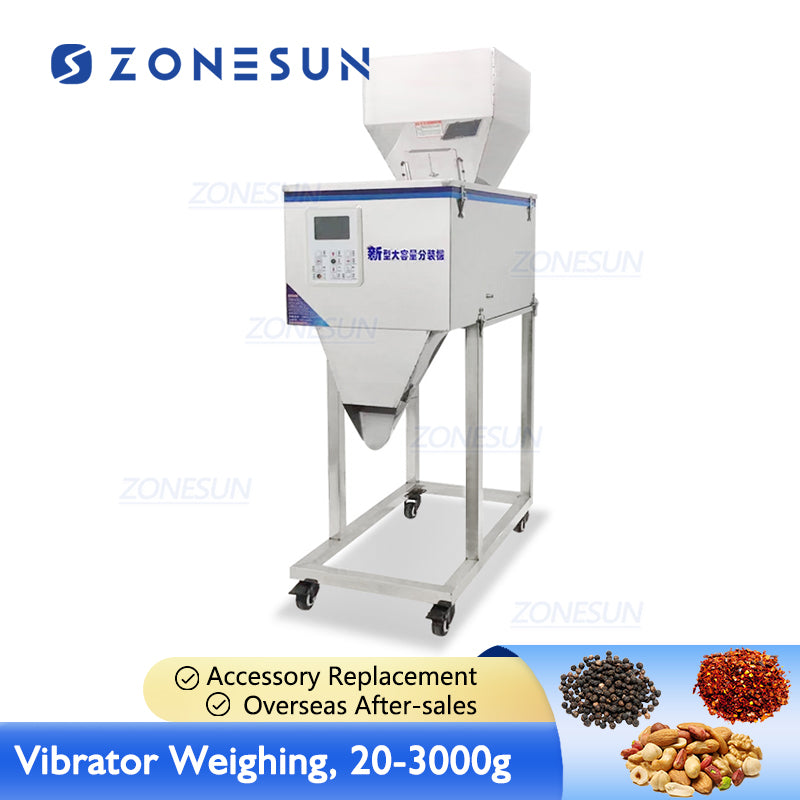
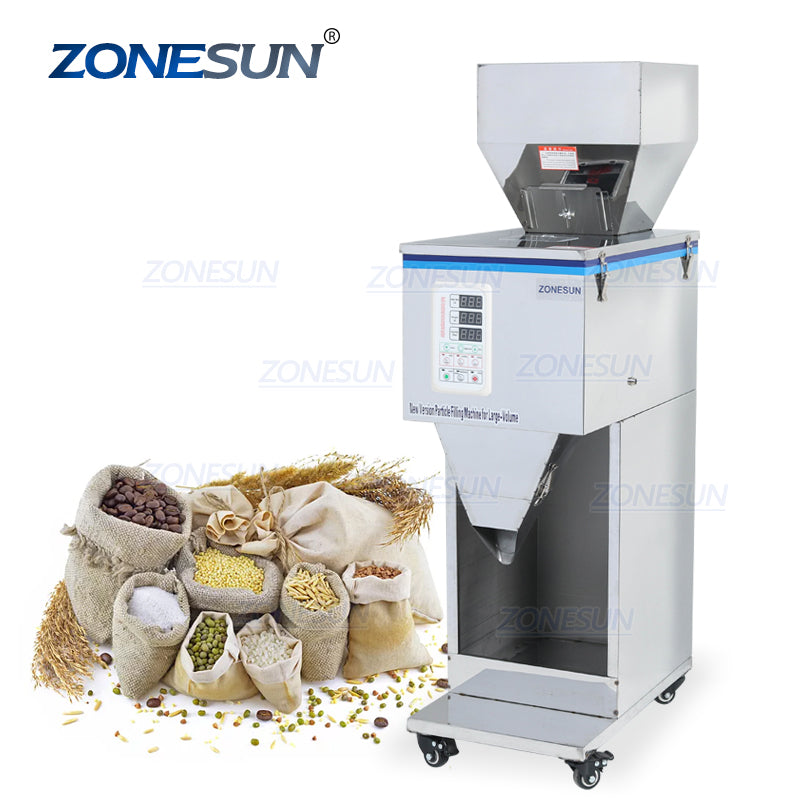
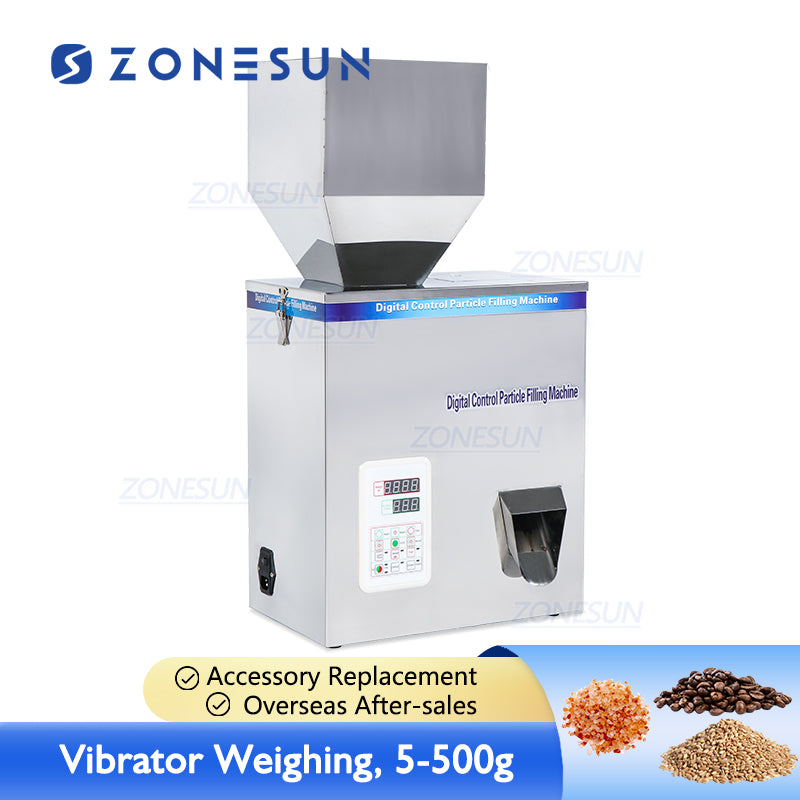
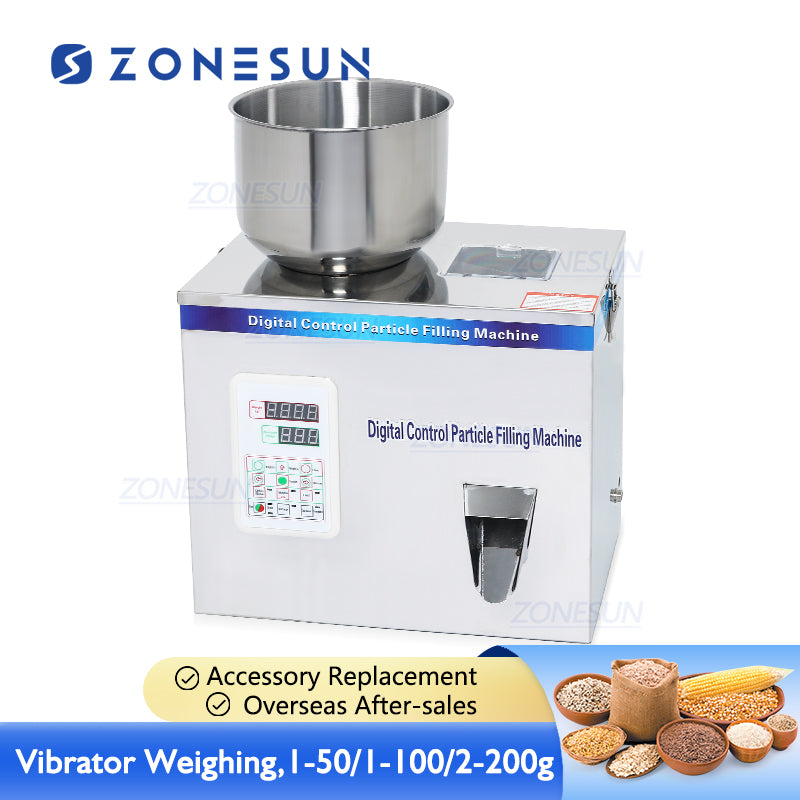
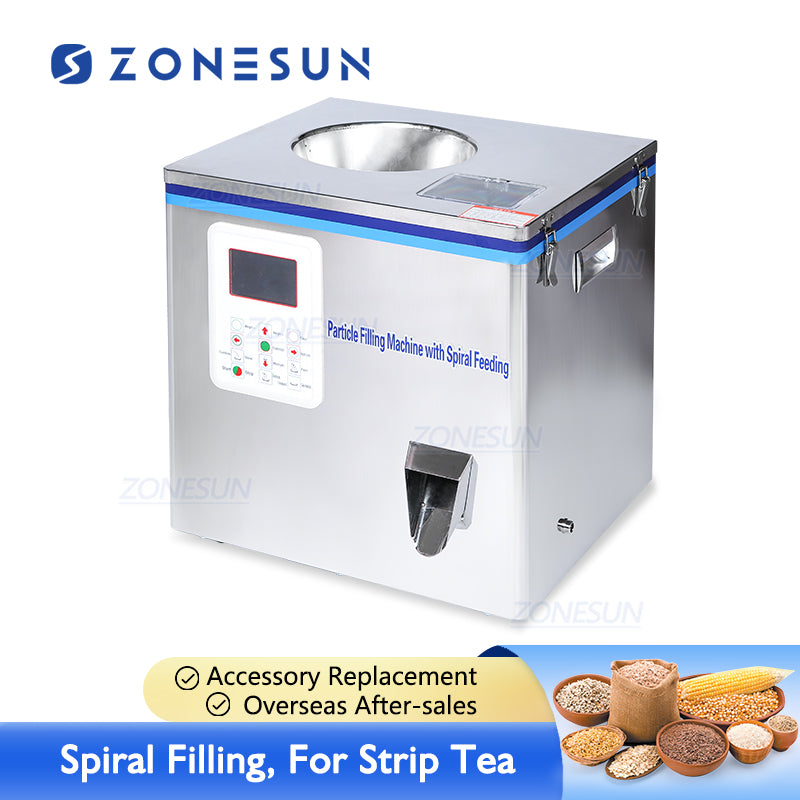
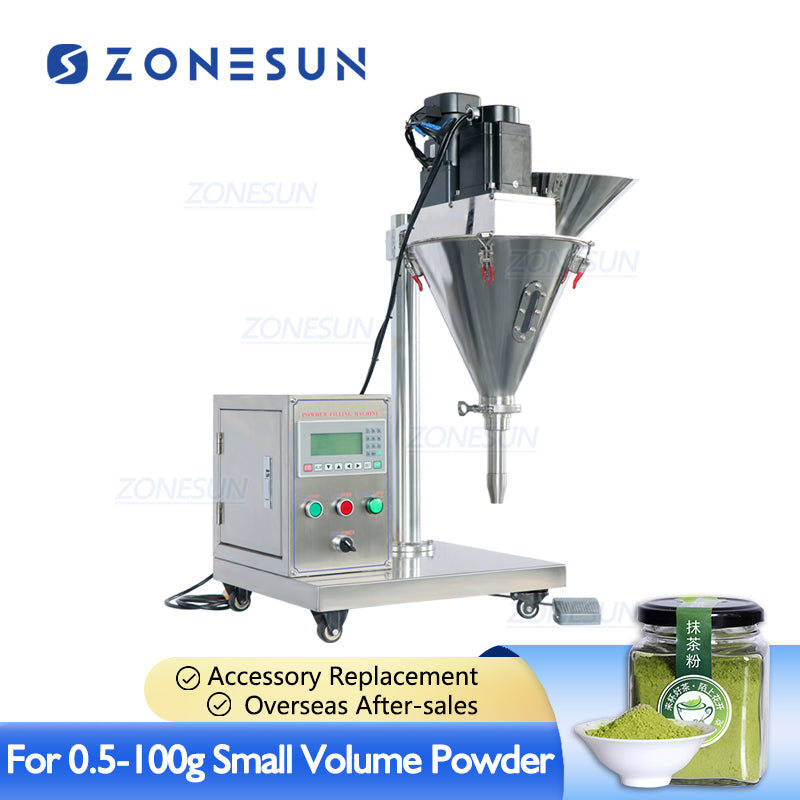
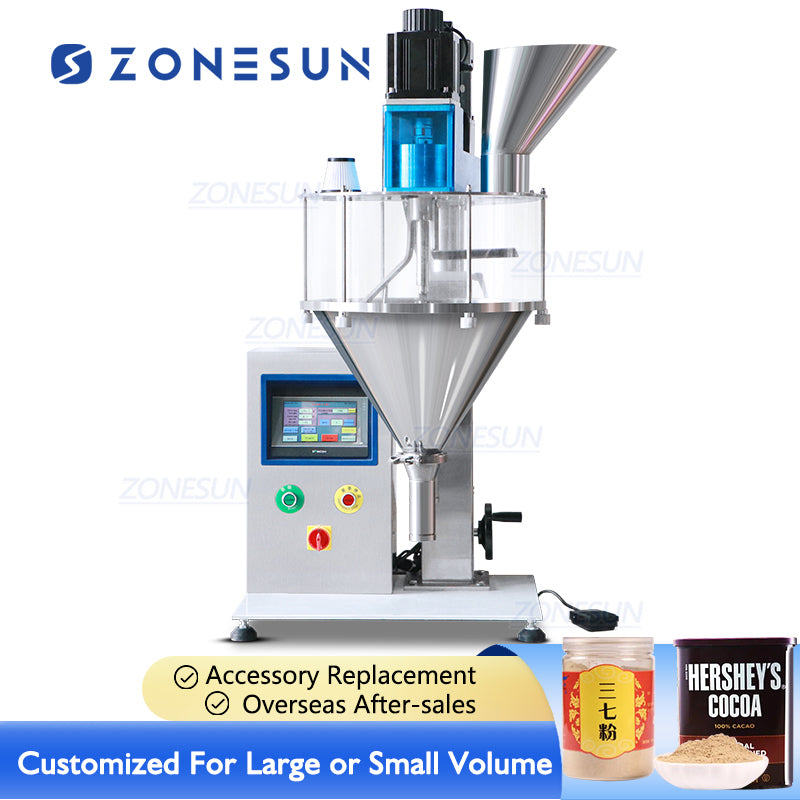
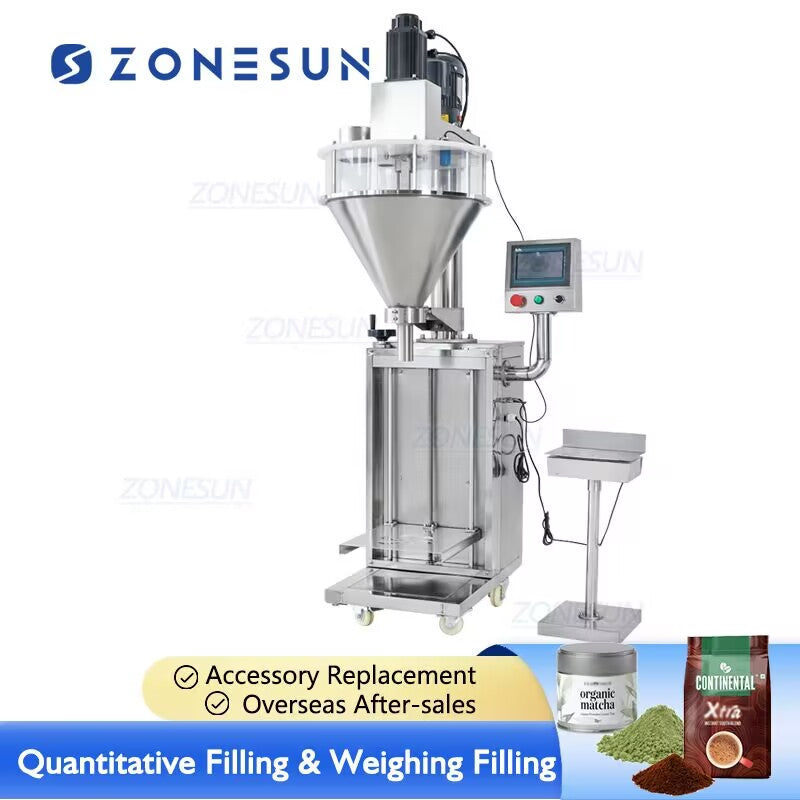
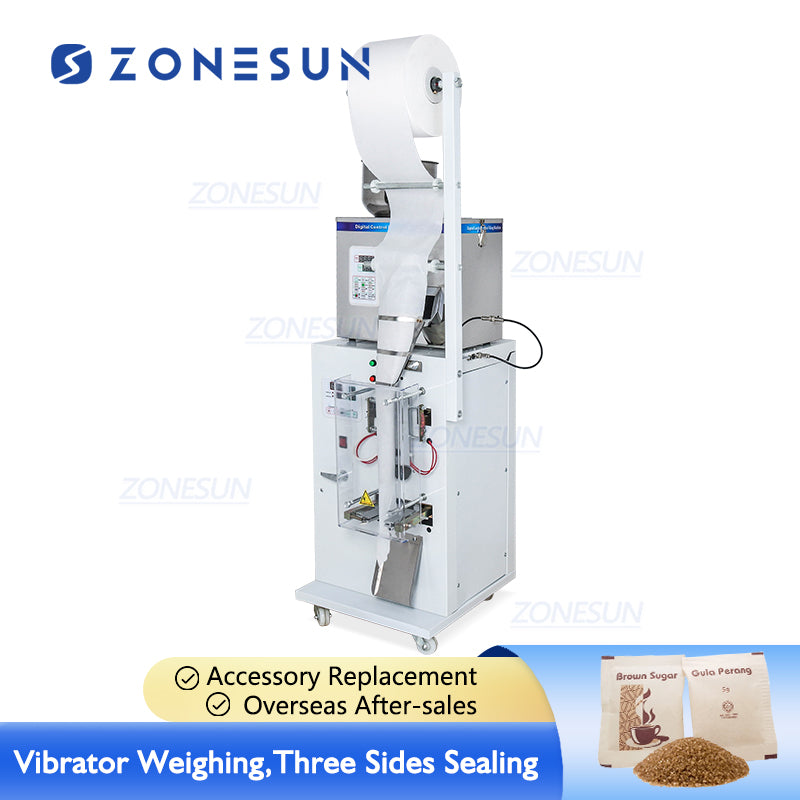
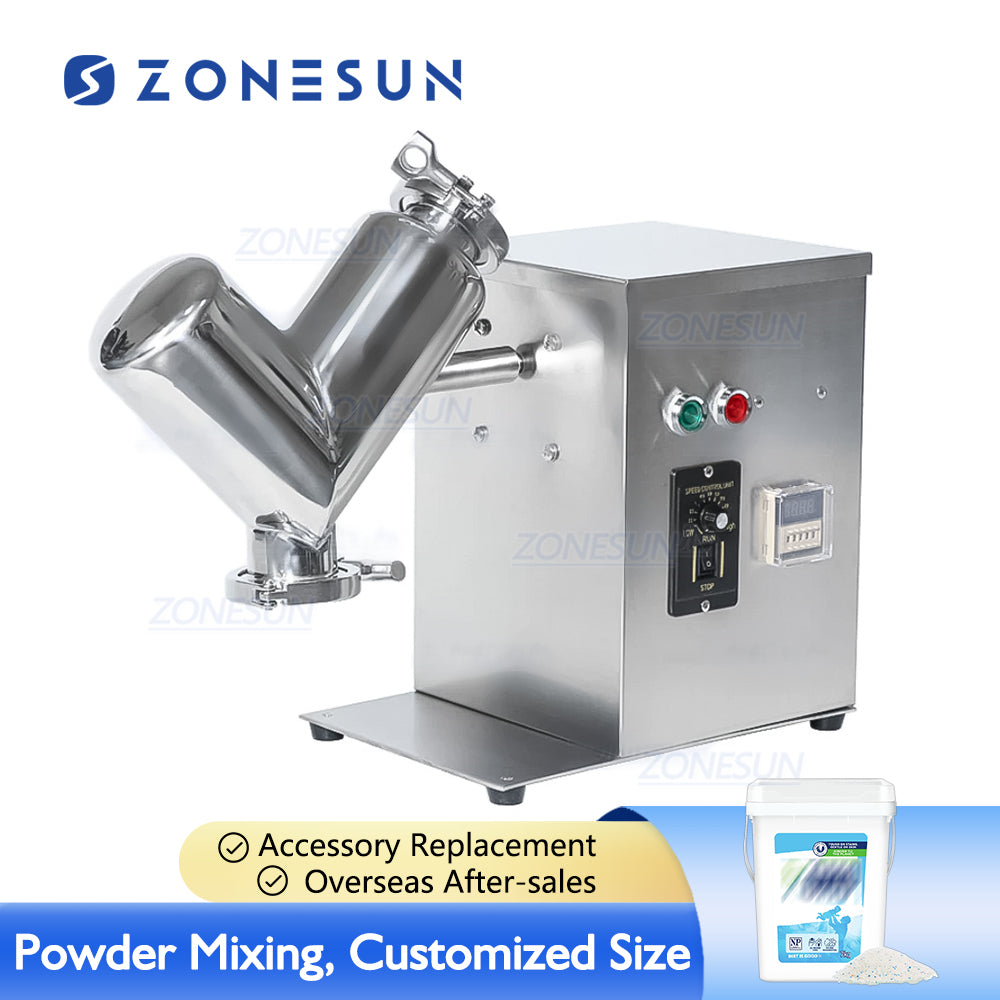
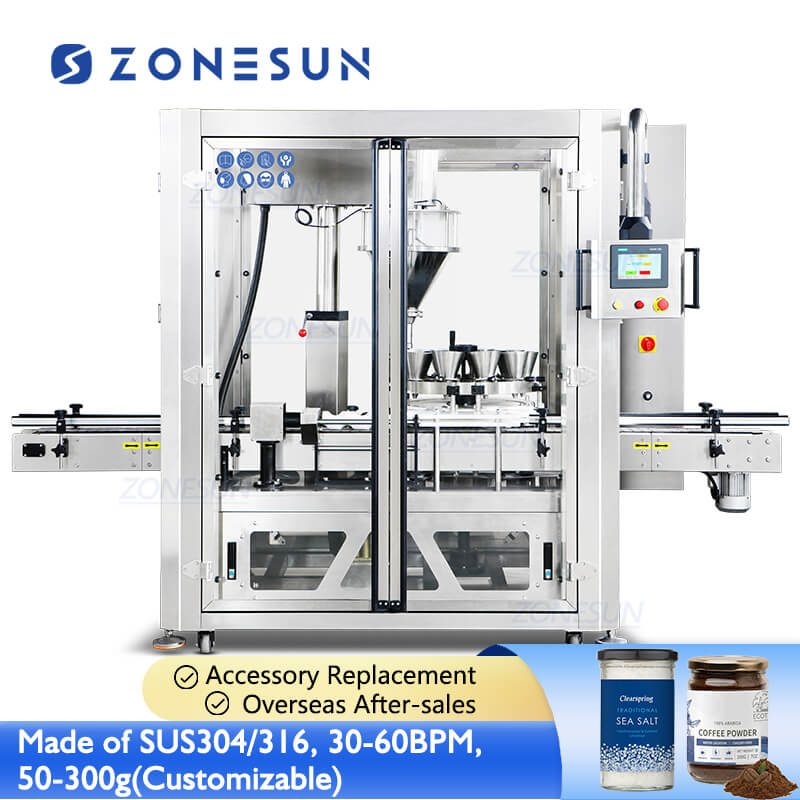
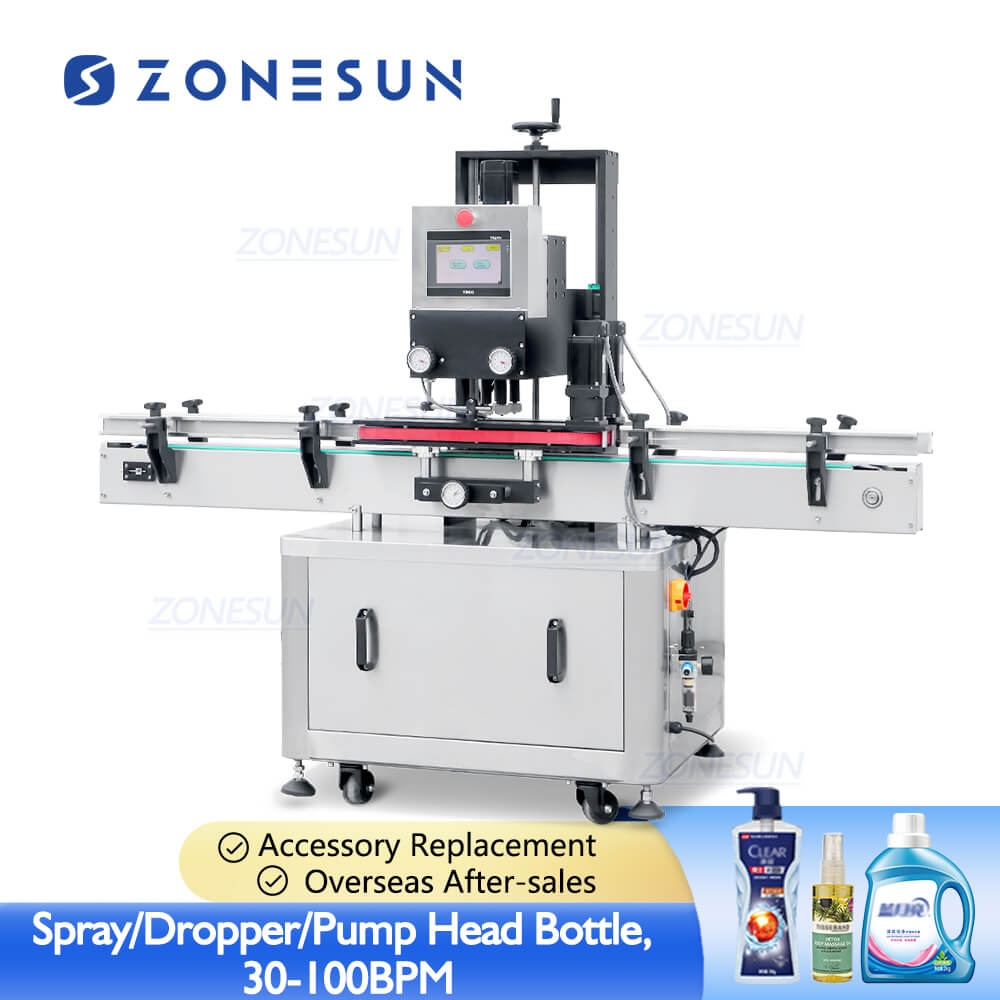
Filling Machine For Other Material


Popular Related Categories


How to Choose a Powder Filling Machine
When choosing a powder filling machine, different powder products such as protein powder, coffee powder, seasoning powder and chemical powder may have different particle sizes, flowability, bulk density and dust levels. Therefore, they may need different dosing systems.
Besides the powder characteristics, the packaging container, filling volume, packaging speed, production environment and machine budget will also affect the final machine selection.
Before purchasing a machine, ZONESUN suggests confirming the following information with us:
- Powder name and pictures or videos of the actual product sample, which can help us check the material characteristics more directly.
- Pure powder or a mixture of powder and granules.
- Particle size and flowability.
- Filling volume.
- Required filling accuracy.
- Required production speed.
- Packaging container, such as bottle, vial, cup or bag.
- Expected machine budget and whether semi-automatic or automatic production is needed.
- Additional processes such as feeding, mixing, sealing, coding or labeling.
Below are some suggestions from ZONESUN for choosing a powder filling machine.
Choose According to Powder Characteristics
Fine and Uniform Powder
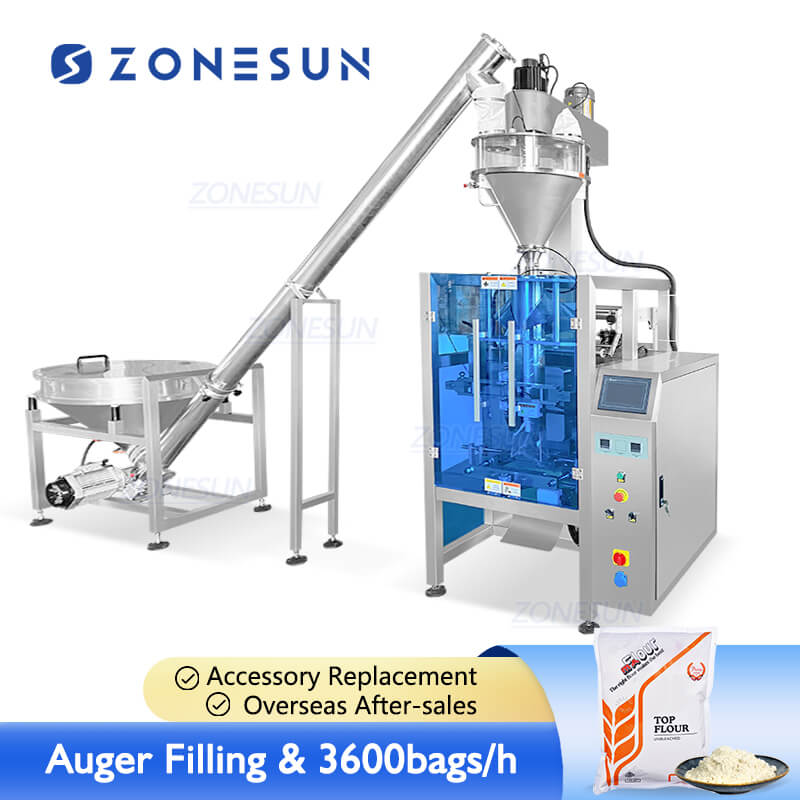
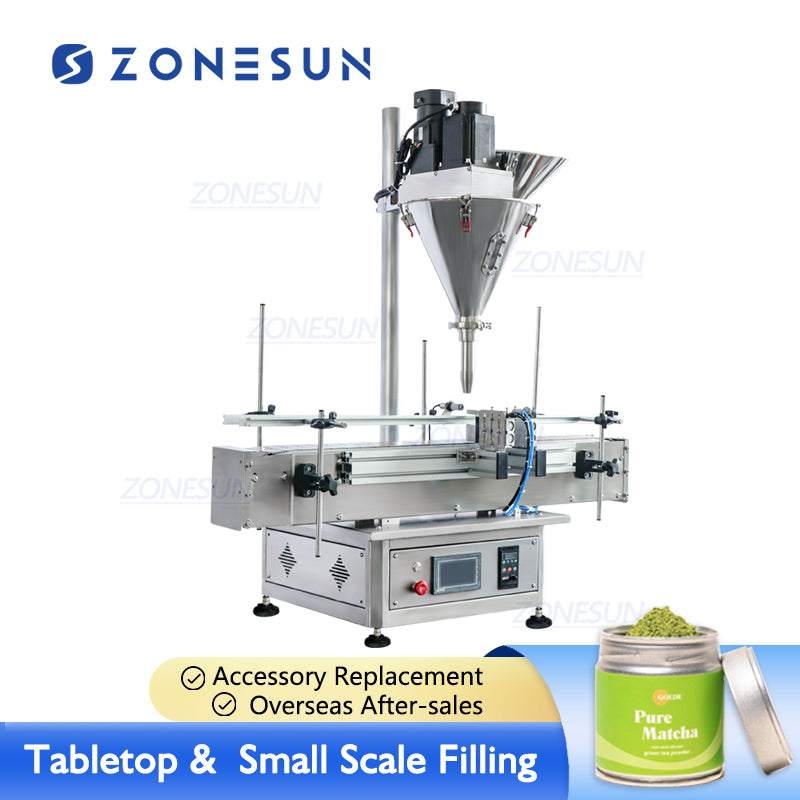
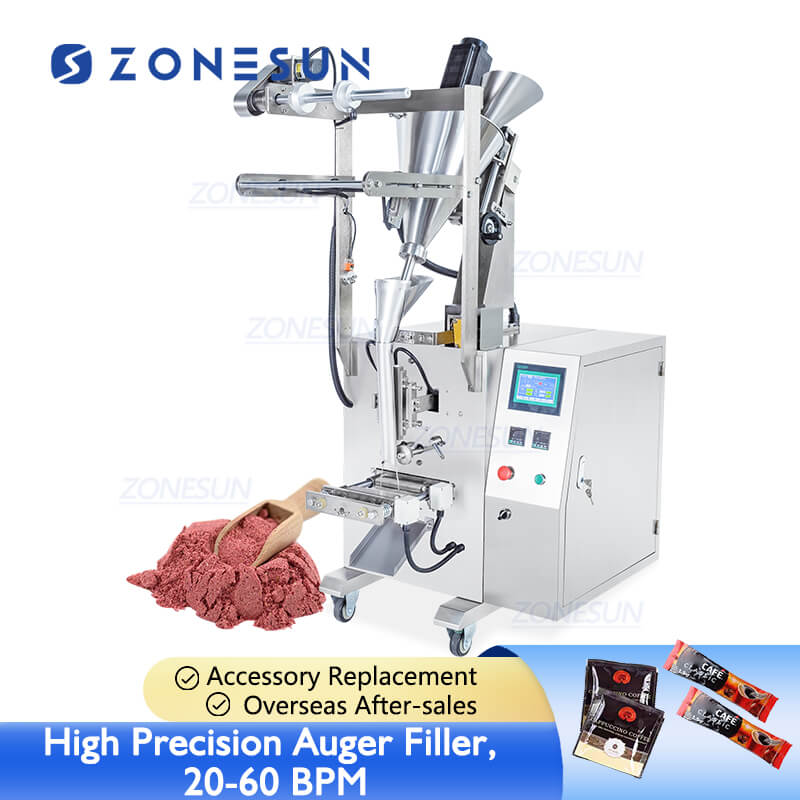
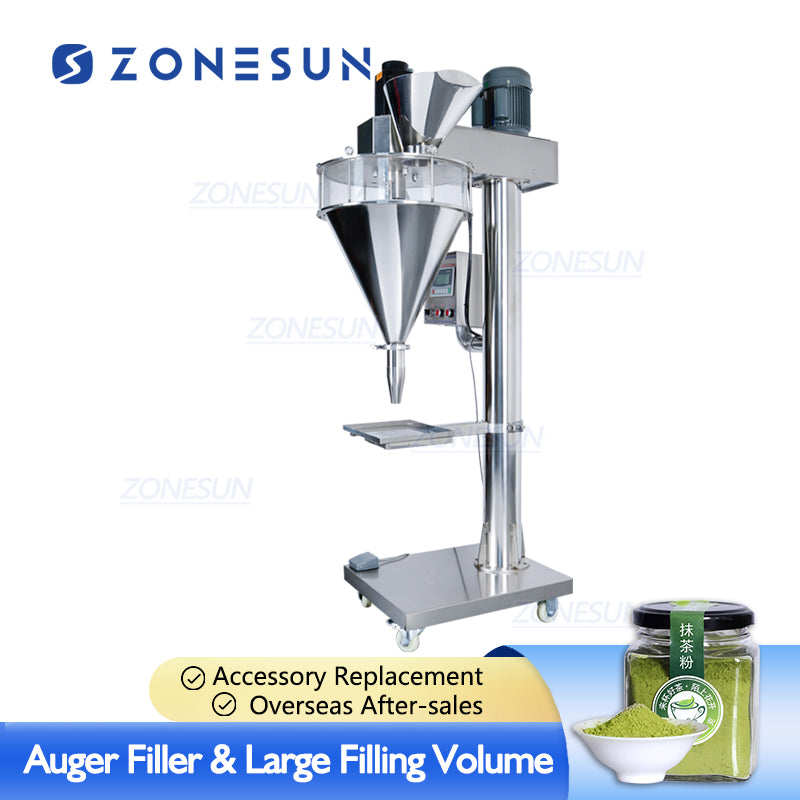
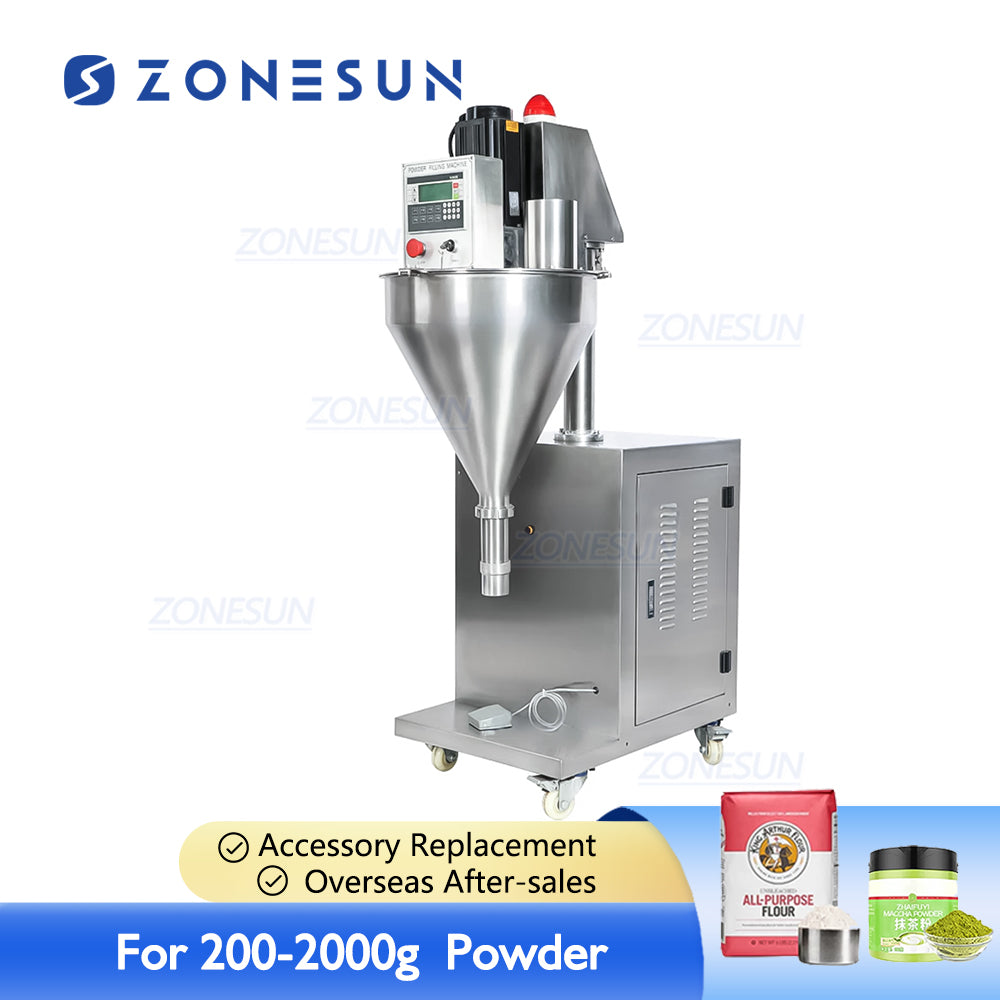
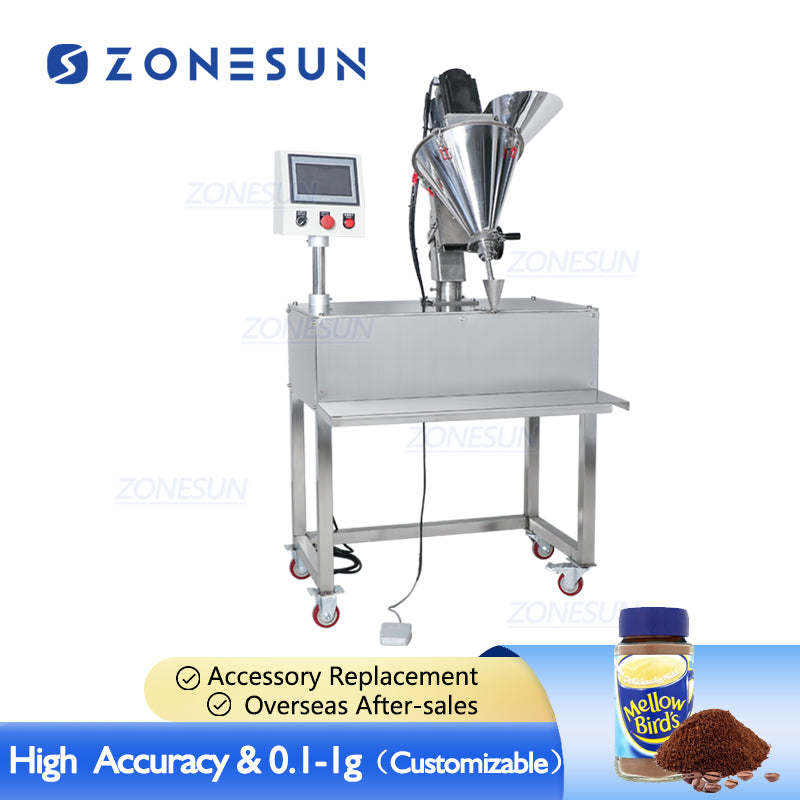
Auger filling is commonly used for fine and relatively uniform powders, such as flour, protein powder, coffee powder, matcha powder and some chemical powders.
The powder is stored in a hopper and moved through the filling tube by a rotating auger. The filling amount is controlled by the auger size, rotation speed and number of rotations. When the filling weight changes greatly, different augers may be needed.
Powder and Granule Mixtures
Some products contain both powder and visible particles, such as seasoning powder mixed with herbs, seeds or small vegetable pieces.
Based on our experience, a volumetric cup filler can be used when the filling volume is small or medium, the material has good flowability and the volume is relatively stable.
When the filling volume is large, the particle size changes greatly, or the product needs to be measured by actual weight, a weighing filler is usually more suitable.
The final filling method should be confirmed according to the actual product sample.
Dusty Powder
Very fine powders, such as eggshell powder, talcum powder and some chemical powders, may create dust during feeding and filling.
According to the product and production environment, the machine can be equipped with:
- Enclosed powder filling structure
- Dust collection connection
- Dust-proof filling nozzle
- Vacuum powder feeder
- Hopper agitator
- Protective cover
Based on ZONESUN experience, a screw powder feeder is not recommended for some very fine powders. Some powder may be collected under the screw, making powder feeding less smooth and machine cleaning more difficult. Before choosing the machine, the dust level, powder flowability and cleaning requirement should be confirmed.
Poor-Flowing or Easily Caked Powder
Sticky powder, moisture-sensitive powder and easily caked powder may not feed steadily. The powder may bridge or become caked inside the hopper, making empty spaces around the auger and causing changes in filling weight.
For these kinds of powders , we normally recommend a vertical auger filling machine with weighing function or a horizontal auger filling machine. Both of these powder filling machine can improves filling accuracy effectively.
Choose According to Measuring System
Different measuring systems are suitable for powders with different characteristics. Auger filling, weighing filling and volumetric cup filling are the three common dosing systems used for powder filling machines.
Auger Filling
The auger filler works by controlling predetermined number of revolutions within a tube to dispense a precise amount of powder into a container.
First the powder is stored in a hopper and fed into the auger. As the auger rotates, it moves the powder forward and dispenses it into the packaging container. The amount of powder dispensed is controlled by the rotation speed and number of revolutions of the auger.
Auger filling has certain requirements for powder flowability and particle size, so it is not suitable for every type of powder. It is commonly used for fine and relatively uniform powders, such as flour, protein powder and matcha powder.
With different machine configurations, an auger dosing system can fill powder into bottles, jars,pouch, sachets, vials and other containers.
The auger and filling tube are normally selected according to the filling weight and powder characteristics. If the required filling ranges are very different, such as 5-100 g and 10-2000 g, changing only the touchscreen settings may not be enough. Different augers, filling tubes or even different machine models may be needed.
Auger filling can also be divided into vertical auger filling and horizontal auger filling. Both structures can be used for quantitative powder filling.
A vertical auger measures the powder and discharges it directly downward. It is a more common structure for general powder filling applications
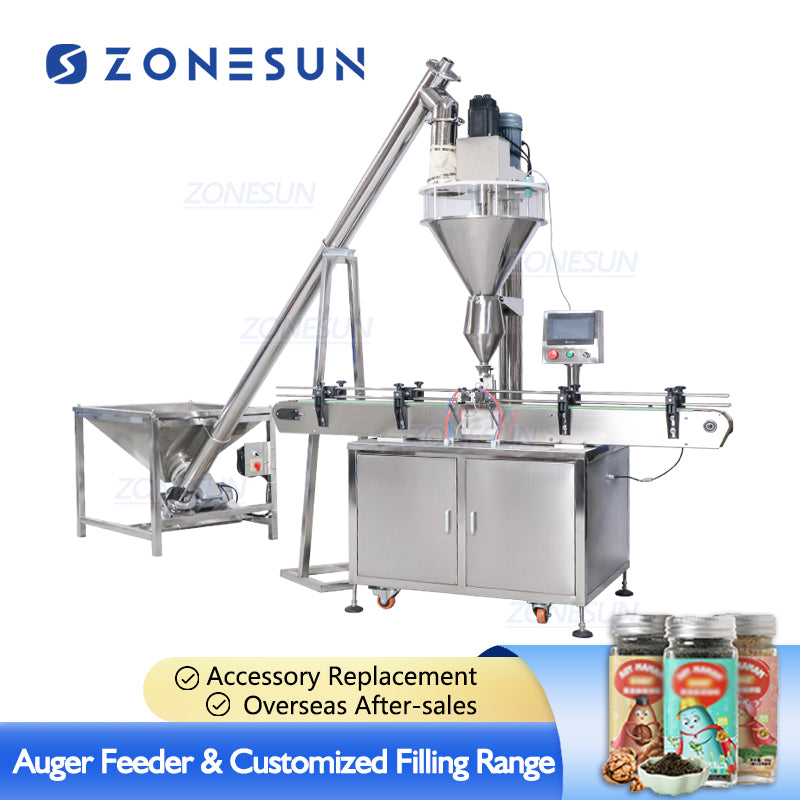
A horizontal auger pushes the powder forward in a horizontal direction. For powders that easily bridge, stick or flow unevenly, this forced pushing structure may help keep the feeding more continuous. A horizontal auger can also be used as a powder feeding system.
Weighing Filling
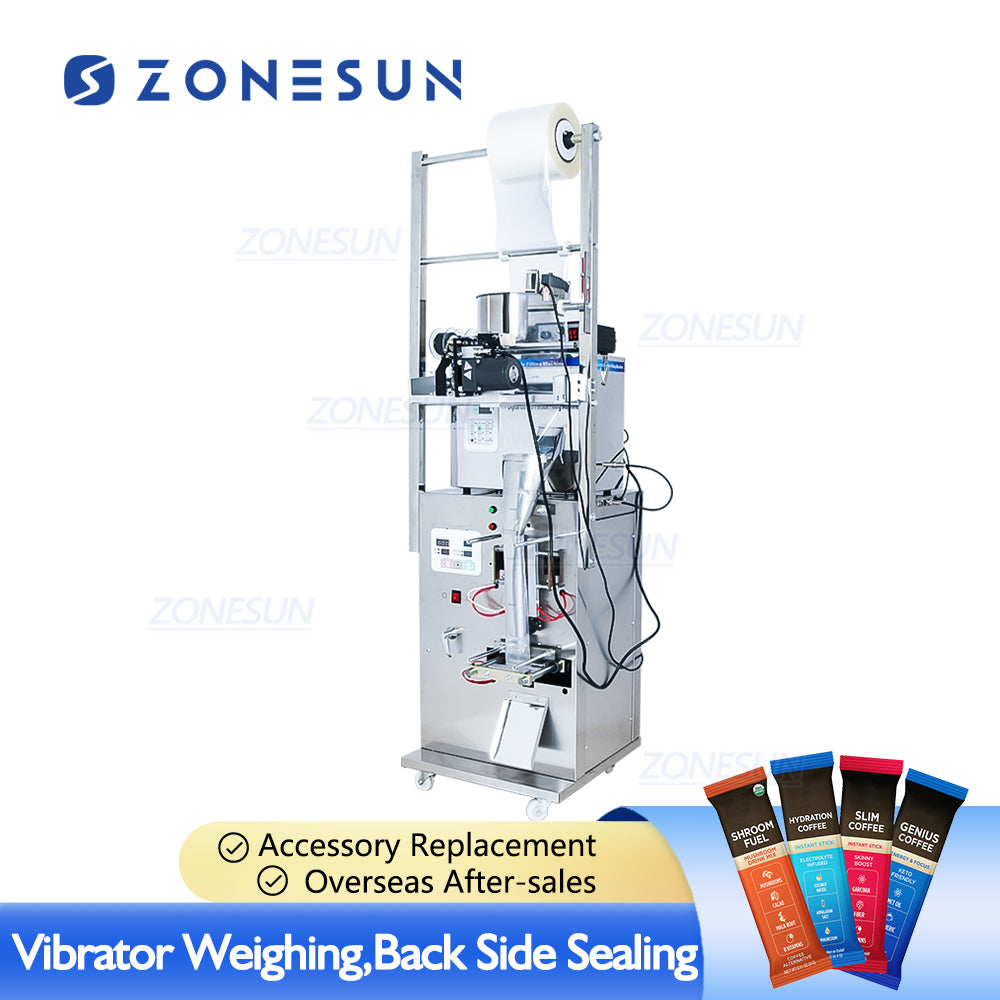
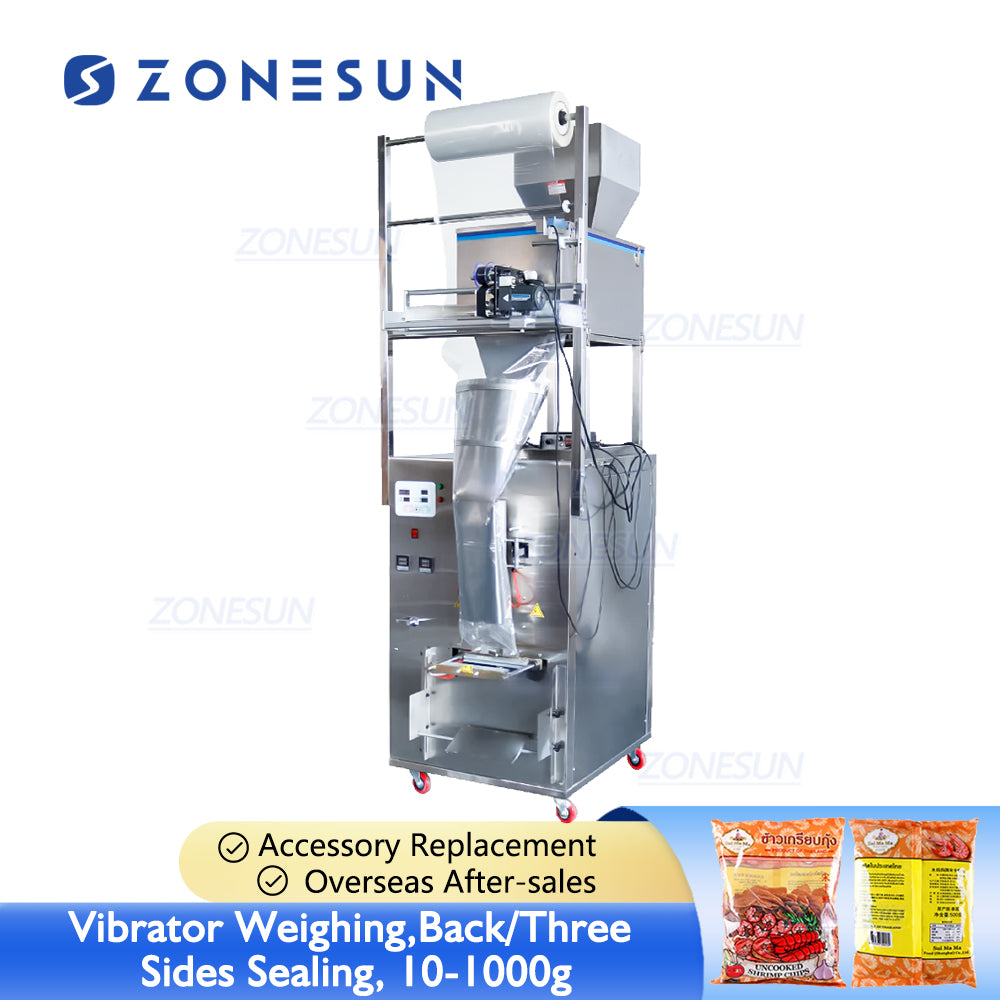
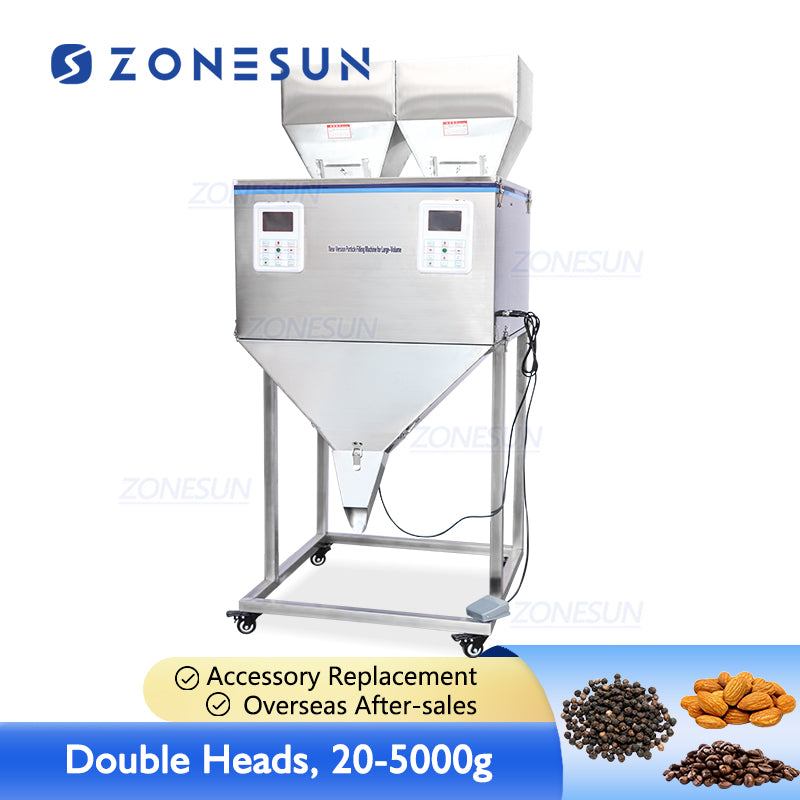
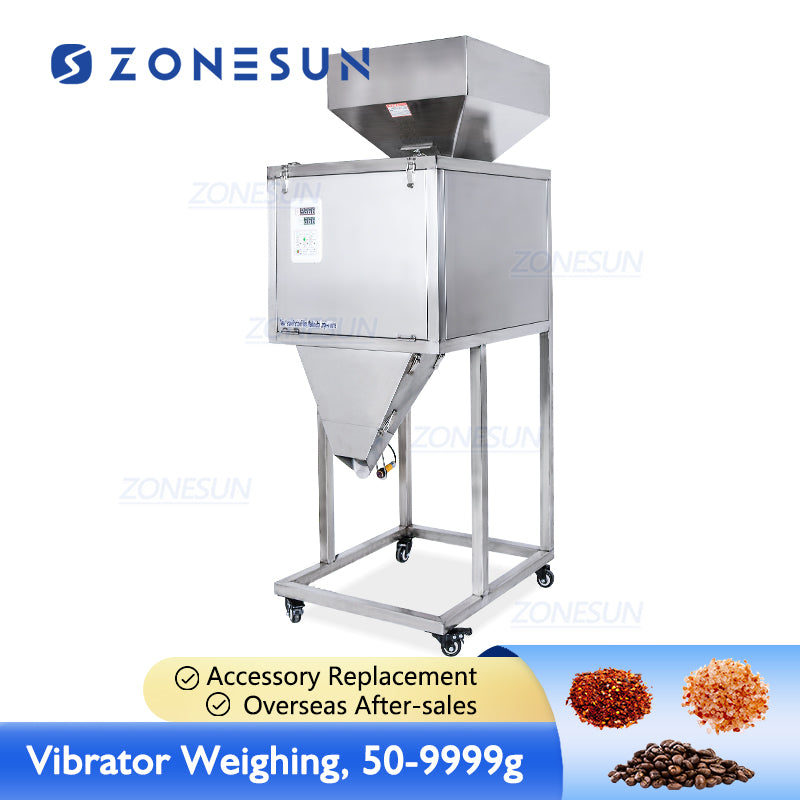
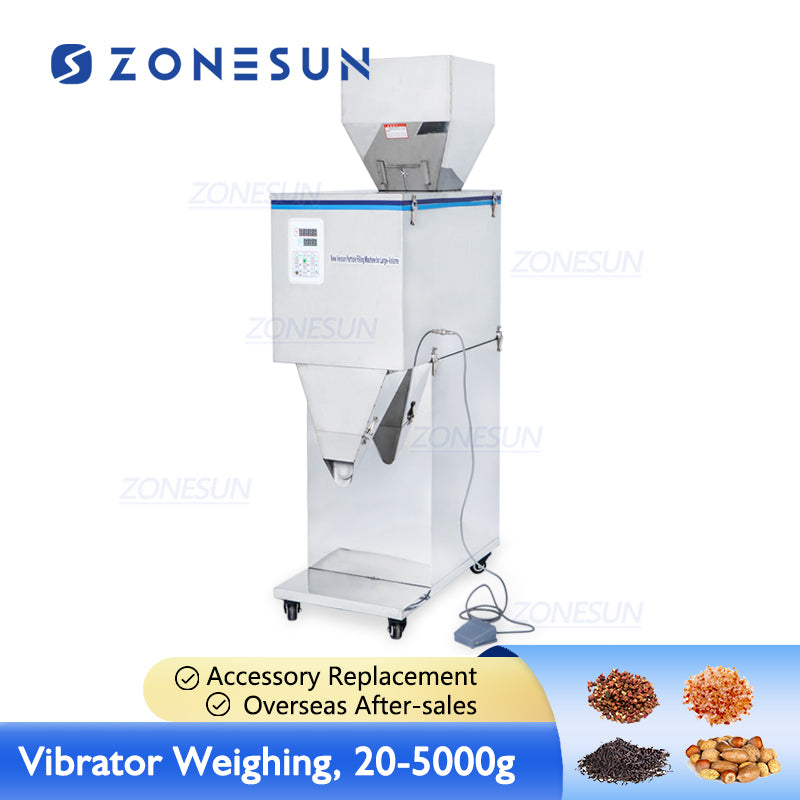
A weighing filler measures the product according to its actual weight. It is commonly used for granules, powder and granule mixtures, or applications that need weight feedback.
Compared with a fixed-volume cup, this filling method can better handle changes in particle size. However, the filling speed may be affected by the target weight, feeding speed and required accuracy.
Volumetric Cup Filling
A volumetric cup filler measures the product by volume.
It is suitable for powders, granules, or powder and granule mixtures with a small or medium filling volume, relatively fixed filling amount, good flowability, high sugar content, stable bulk density and low dust level.
This filling method is normally used for products that do not require very high filling accuracy.
The above information is based on common applications. The final filling method should be confirmed according to the product sample, filling weight and required accuracy.
Choose According to Filling Weight
Gram-Level Filling
Gram-level filling is commonly used for small bottles, vials, jars, sachets and premade pouches. Auger, weighing or volumetric cup filling can be selected according to the powder characteristics.
The auger size and filling tube should match the target filling weight and container opening. For small bottles or vials, the filling nozzle also needs to be designed according to the container opening.
Kilogram-Level Filling
A larger filling weight, such as 20 kg, normally needs a larger hopper, larger auger, higher-power feeding system and a bag support structure or weighing platform.
The hopper capacity, motor configuration, filling speed and bag handling method can be customized according to the production requirement.
Choose According to Packaging Type
For Bottles and Jars
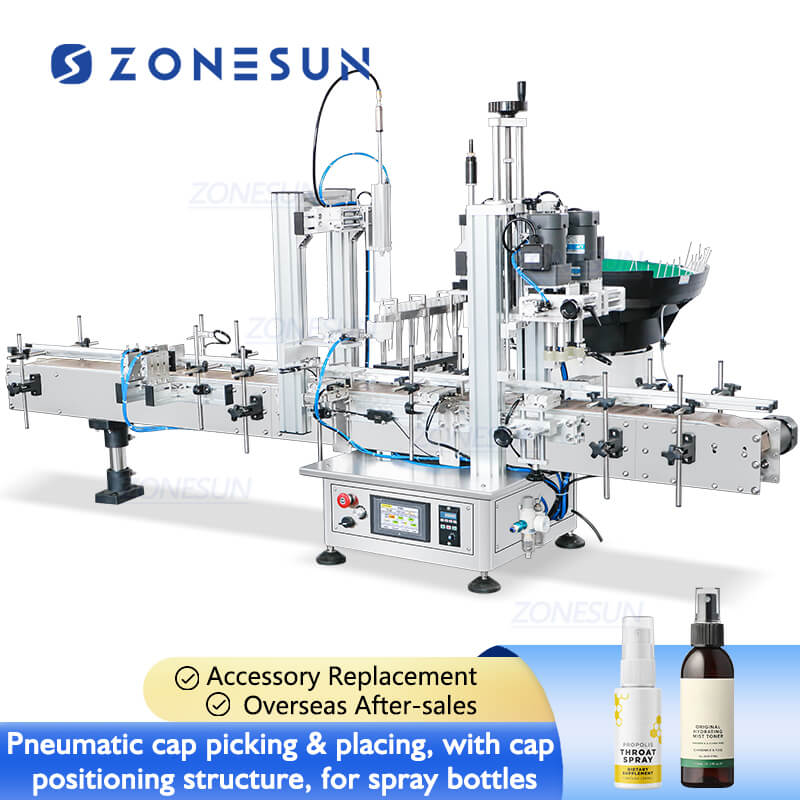
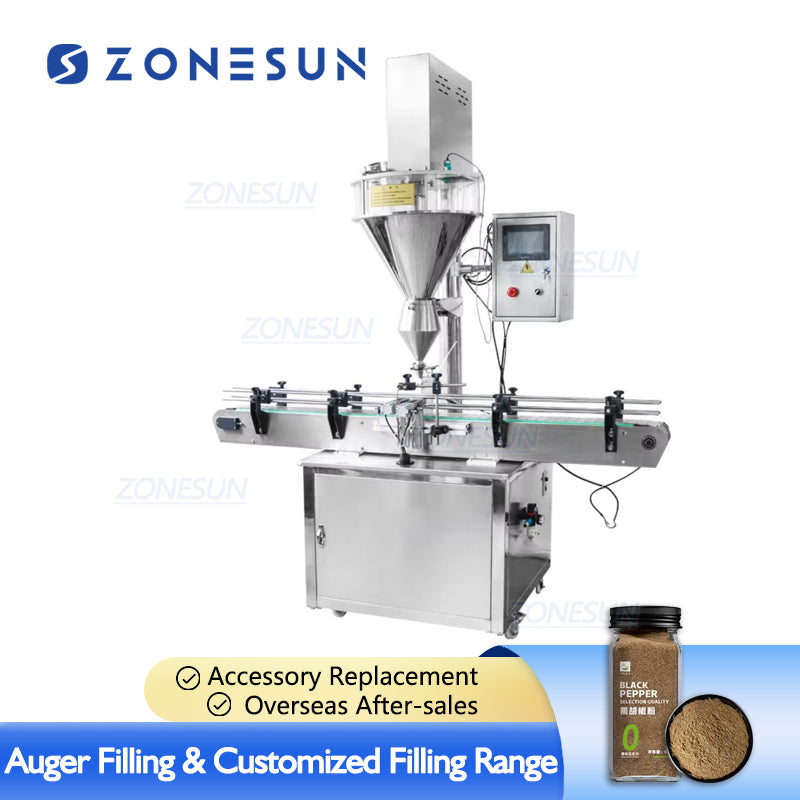
A bottle powder filling machine mainly completes powder measuring and filling. It can work independently as part of a production line, or connect with a bottle unscrambler, capping machine, induction sealing machine and labeling machine.
Before designing the machine, the bottle opening, bottle height, filling weight and required speed should be confirmed.
For Premade Pouches
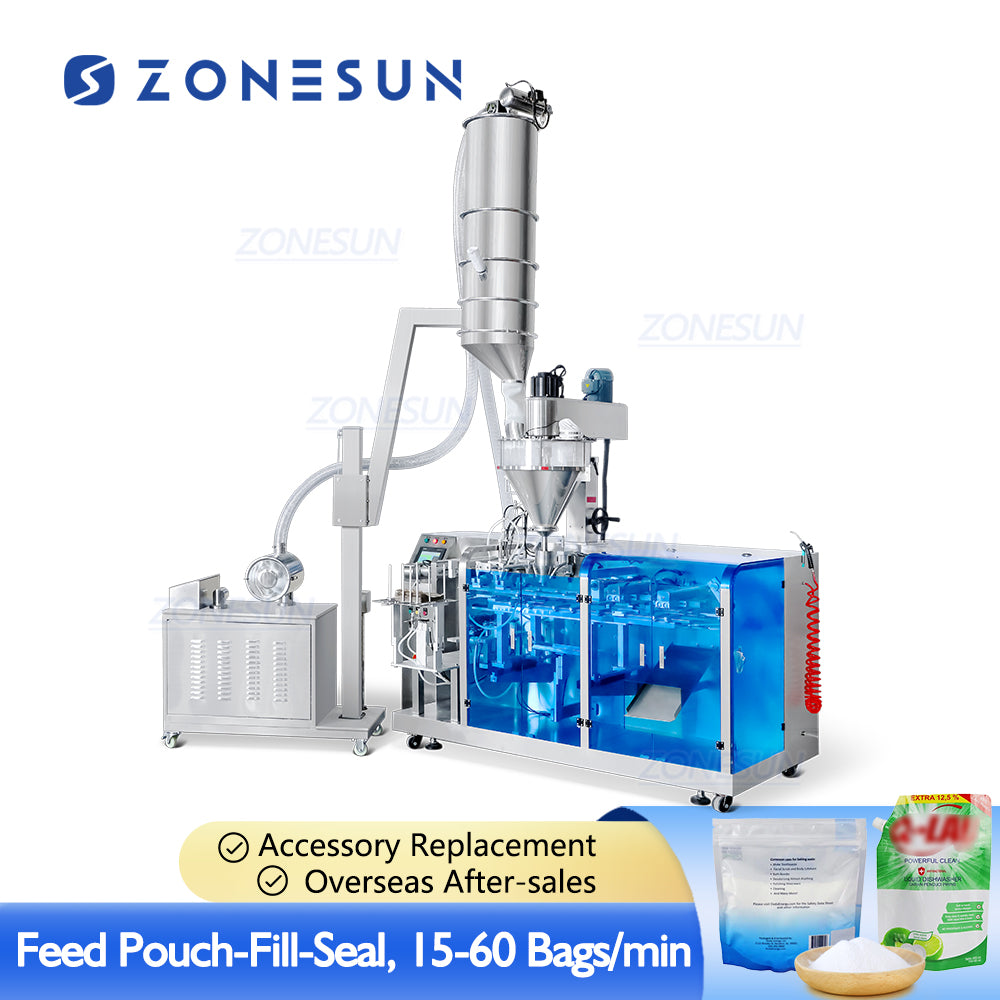
A premade pouch powder packaging machine normally completes bag feeding, bag opening, powder filling and sealing.
The following bag information is needed:
- Bag width and length
- Bag material and thickness
- Flat bag, stand-up pouch or zipper pouch
- Standard or irregular bag shape
- Bag opening and sealing area
- Target filling weight
The machine can be customized for different bag shapes if it can hold, open and seal the bag correctly. A bag drawing or actual sample should be provided before confirming the machine.
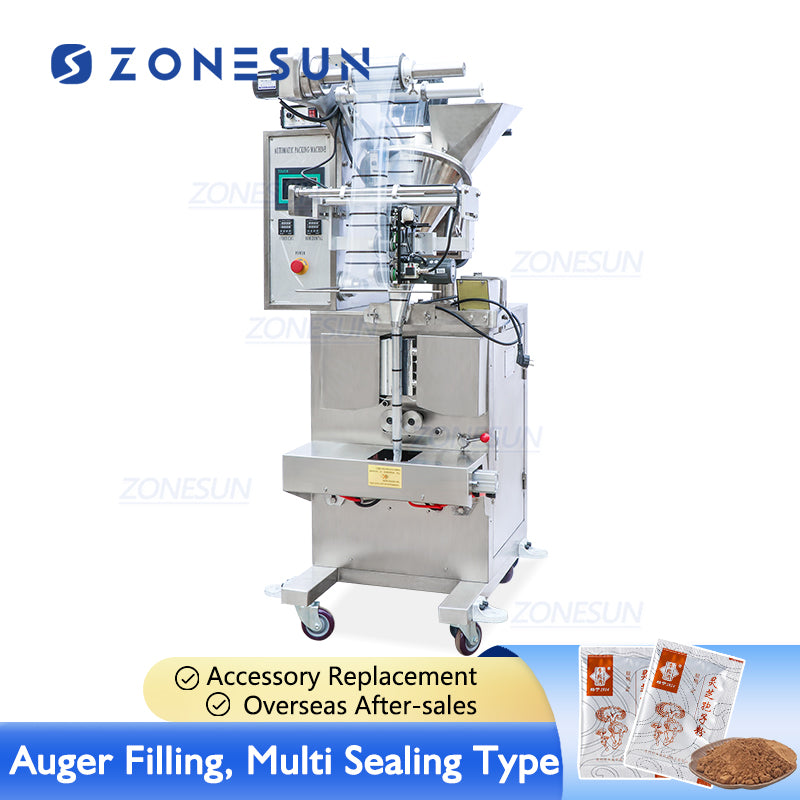
For Roll Film Bags
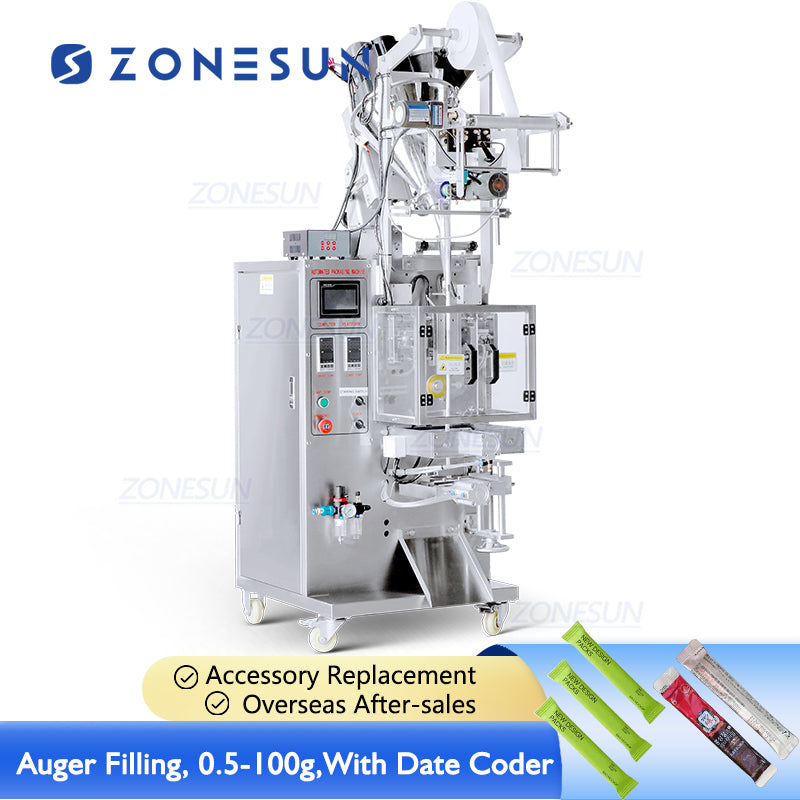
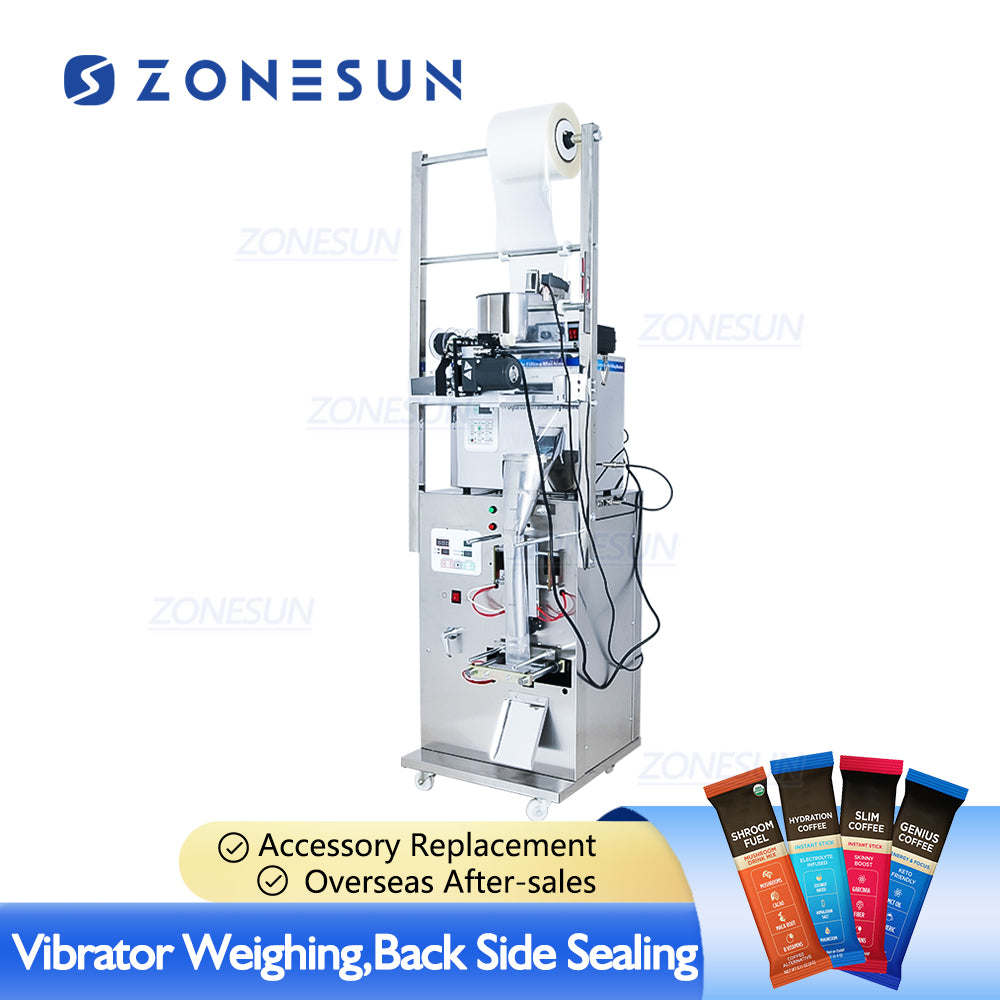
Some powder filling machine uses roll film to finish measuring, bag making, filling, sealing and discharging process.
Additional nitrogen filling, hole punching, and coding for production date, batch or lot number are optional as needed.
The film width, thickness, sealing layer and color mark need to be checked before choosing the machine.Common laminated films can normally be used, but the film still needs to match the sealing temperature and the product. It is better to provide the film specifications or send some film samples for testing.
For Vials
For vial packaging, powder filling can be combined with vial feeding, stopper or cap feeding, capping and crimping.
If the powder is used for pharmaceutical or chemical products, please provide the filling dose, vial opening size and powder information. The required contact material, cleaning method and production environment also need to be considered when designing the machine.
For Coffee Capsules and Cups
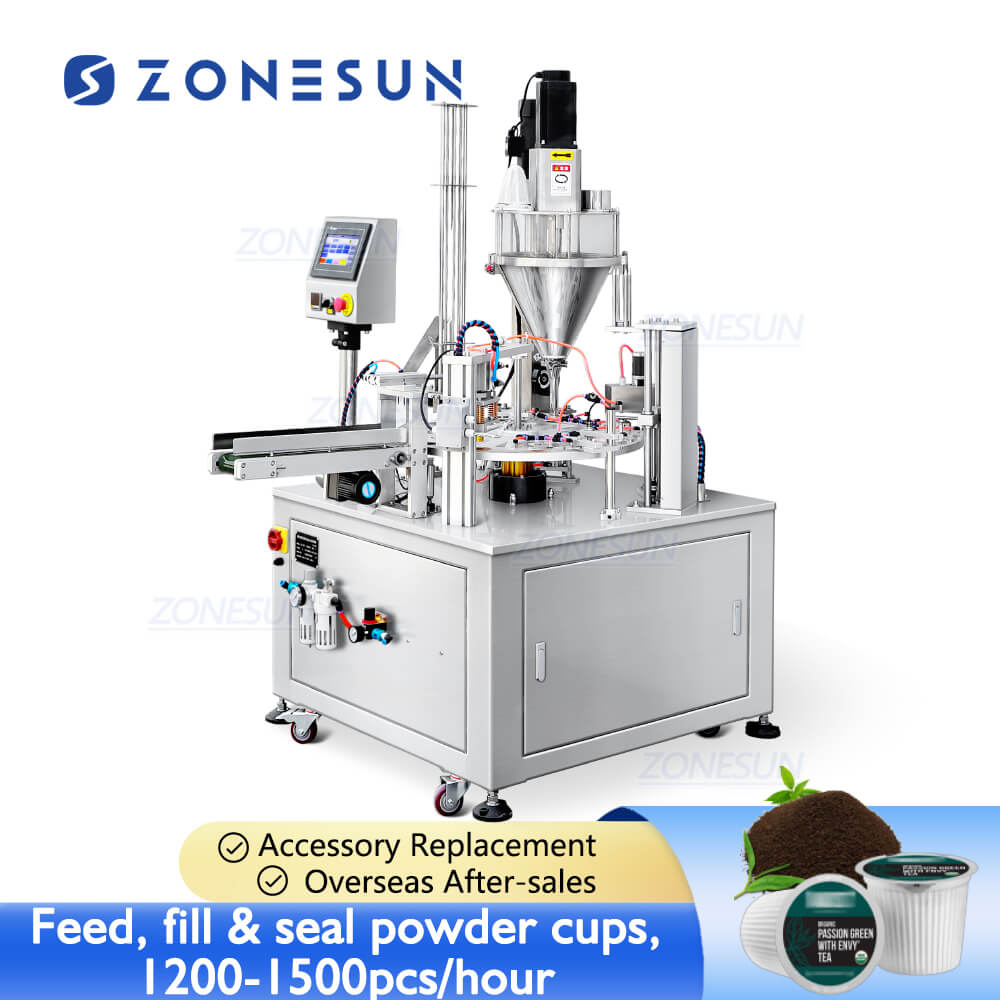
A coffee capsule powder filling machine normally combines capsule feeding, powder measuring, sealing and output.
The capsule type, powder particle size, filling weight, sealing film type and material, and required output should be confirmed.
Coffee powder with different grinding sizes may have different flowability and bulk density. This can affect the filling result.
Choose According to Powder Filling Speed
Production speed depends on the filling weight, powder characteristics, packaging type, required accuracy and number of filling heads.
A machine filling 10 g sachets and a machine filling 2 kg bottles cannot be compared only by the number of bags or bottles filled per minute.
- Higher output may need:
- Multiple filling heads
- Continuous powder feeding
- Larger hopper
- Automatic container handling
- Faster downstream machines
- Checkweighing and rejection system
When customizing a machine, please provide the required filling weight and target output.
Complete Powder Filling and Packaging Lines
A powder filling machine can work as a stand-alone machine or connect with other packaging equipment.
Bottle Powder Filling Line
A complete bottle line can include bottle feeding, powder filling, capping, induction sealing, labeling, checkweighing and output.
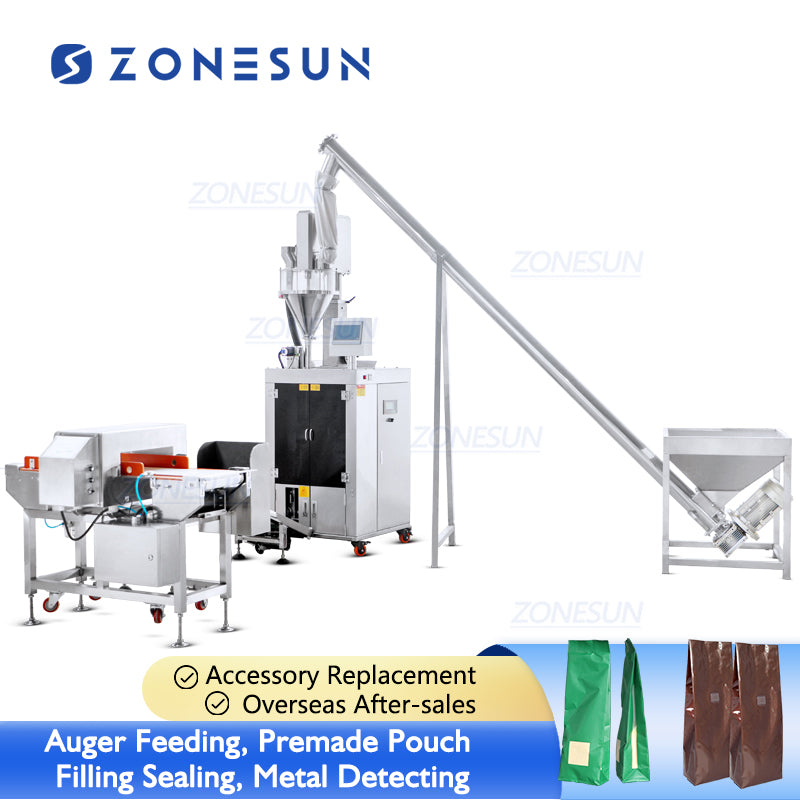
Premade Pouch Powder Line
A premade pouch line can include powder feeding, bag feeding, bag opening, powder filling, sealing, coding, metal detection and checkweighing.
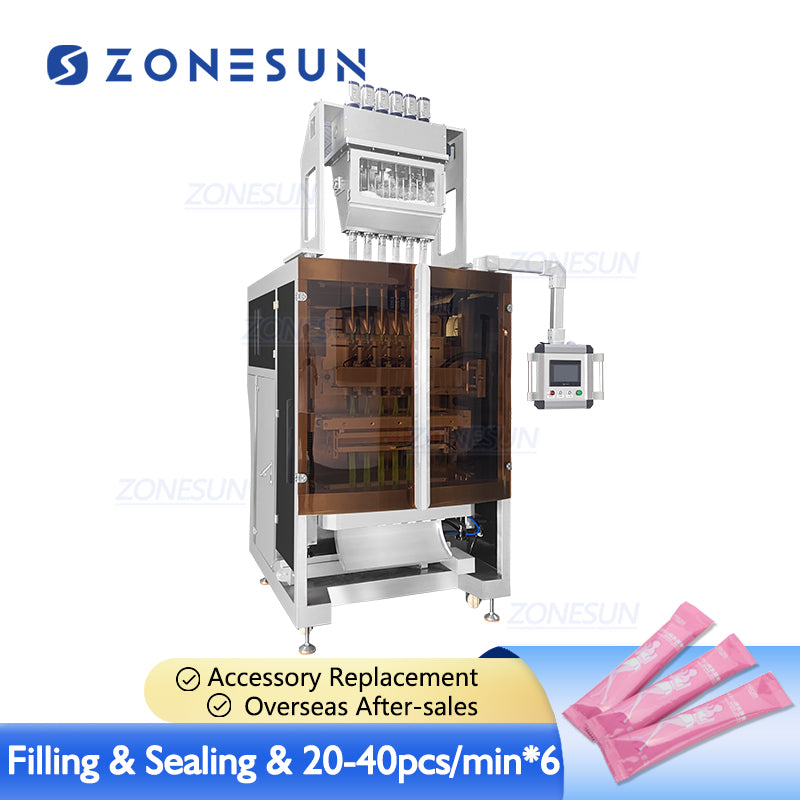
Roll Film Sachet Line
A roll film sachet line can complete powder feeding, measuring, bag forming, filling, sealing, cutting and date or batch coding.
Vial Powder Filling Line
A vial powder filling line can include vial feeding, powder filling, stopper or cap feeding, capping, crimping and inspection.
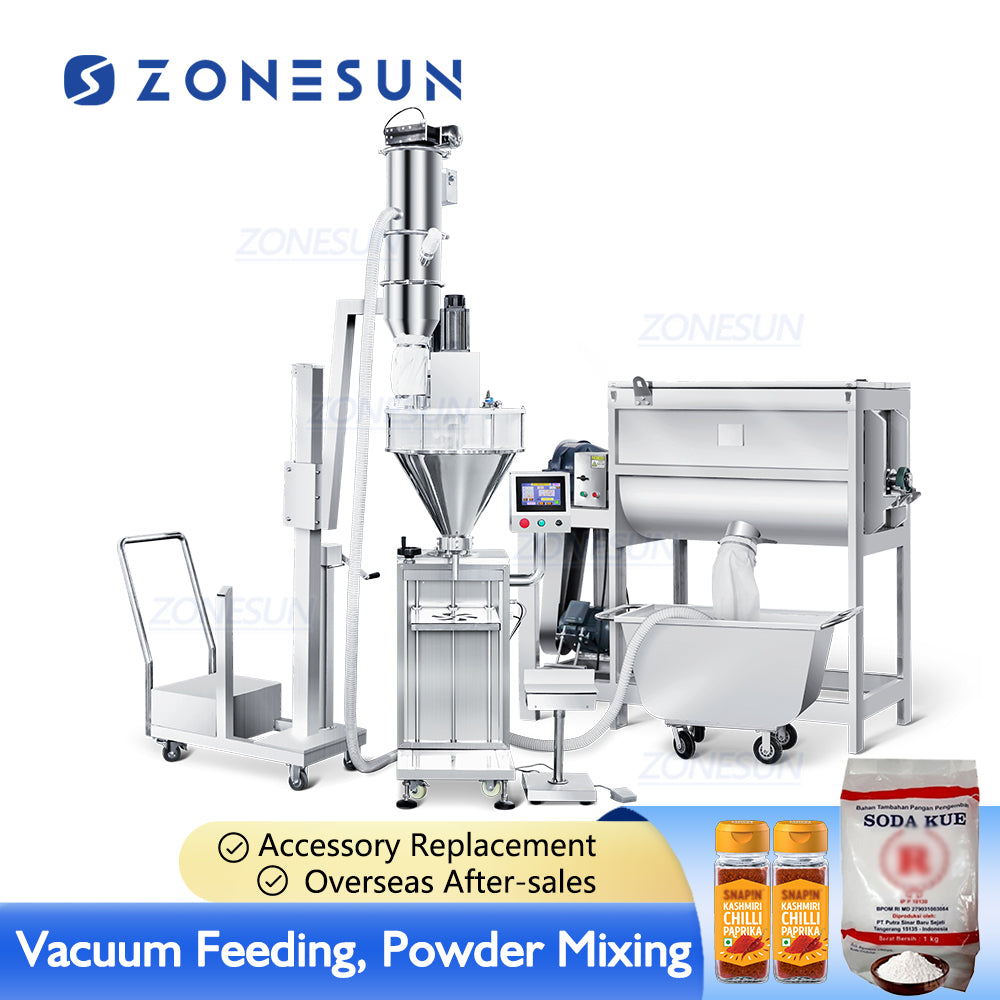
Powder Mixing and Filling Line
For powder mixtures such as herbal seasonings, a powder mixer can connect with a feeding system and powder filling machine.
The mixing capacity, mixing time, discharge method and filling volume should match each other. This can reduce waiting time between different production processes.
Optional Equipment and Customization
Powder filling machines can be customized with different components according to the product and packaging requirements.
Available options include:
- Screw powder feeder
- Vacuum powder feeder
- Customized hopper capacity
- Hopper agitator
- Dust collection system
- Weighing feedback device
- Checkweigher
- Metal detector
- Date, batch or lot-number coder
- Customized auger and filling tube
- Multiple filling heads
- Protective cover
- Customized voltage and electrical components
Please confirm the required options before quotation because they may affect the machine size, price and production lead time
Machine Materials, Certificates and Production Requirements
The machine body and standard powder-contact parts are normally made of SUS304 stainless steel. SUS316L can also be used for the contact parts if better corrosion resistance is needed.
Before quotation, please tell us if you have any requirements for the contact material, surface finish, CE documents or electrical standard.
The documents and configuration are different for each machine model, so these details need to be checked before production.
Delivery and After-Sales Support
The price and lead time will change according to the filling method, filling range, package type and custom requirements.
We can also quote door-to-door shipping. The shipping cost is based on the delivery address, machine size and shipping method.
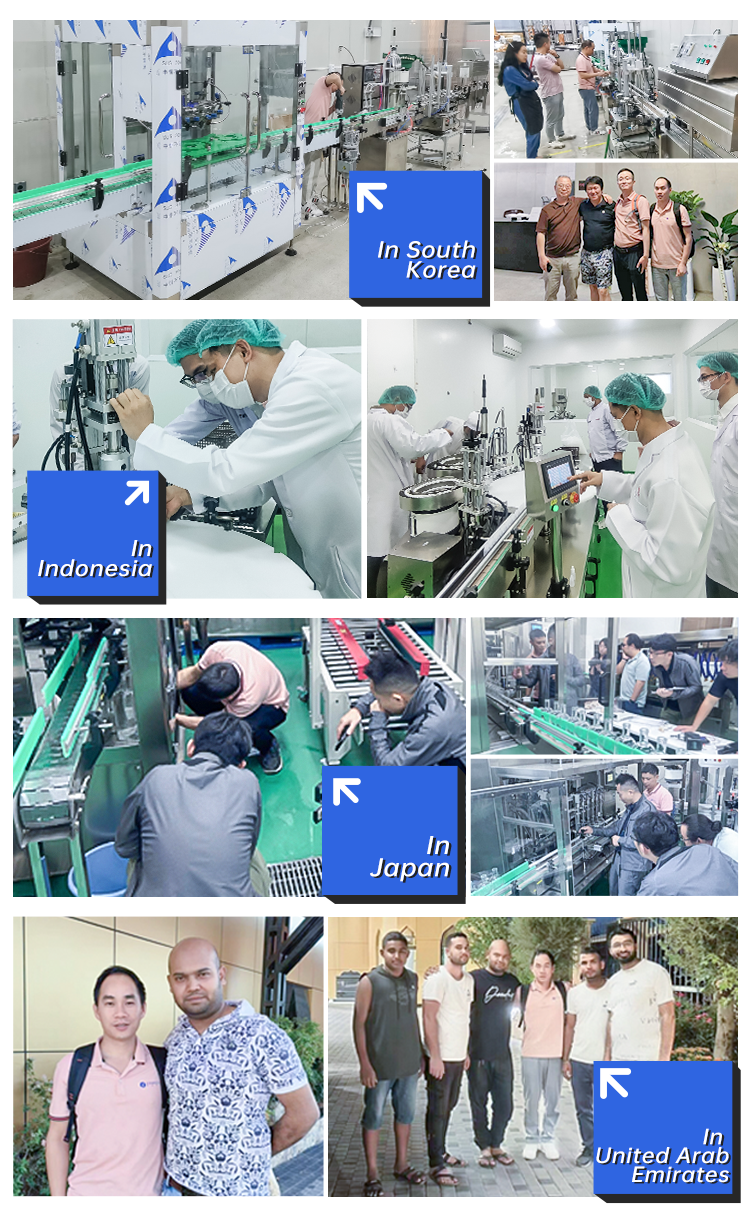
After receiving the machine, we can provide the manual, setup video and one-to-one video support. We can also help with parameter setting, filling calibration, alarm checking and other common problems. Spare parts are available, and overseas service can be arranged in some areas.
Frequently Asked Questions of Powder Filling Machine
Can One Auger Filler Cover Different Filling Weights?
It depends on the difference between the minimum and maximum filling weights.
A small adjustment can normally be made through the touchscreen. A large filling range may need different augers and filling tubes. In some cases, two machine configurations may be more suitable.
Which Machine Is Suitable for Powder Mixed with Herbs or Granules?
A volumetric cup filler or weighing filler may be more suitable than an auger filler. It depends on the material flowability and whether the ingredients separate during feeding.
We recommend sending the actual product sample for testing.
How Do You Confirm Powder Filling Accuracy?
Filling accuracy should be tested with the actual powder, target filling weight and machine configuration.
Powder density, particle size, feeding stability and machine speed can all affect the filling result.
Can You Provide a Complete Powder Packaging Line?
Yes. ZONESUN powder filling machines can connect with powder feeders, mixers, capping machines, sealing machines, labeling machines, coding machines, checkweighers, metal detectors and cartoning machines.
Do you provide maintenance and support for powder filling machines?
Yes, we provide maintenance services, training, and support to ensure the optimal performance of filling machines. like
One-year Warranty: Free replacement of parts within the warranty period, except for easily damaged parts. Out of the warranty period, you can still contact us for any questions about the machine (machine maintenance, parts purchase)
After-sales Service: Offer user manual, install &debugging video, one-to-one video chat, oversea after-sales service( in some area)
Oversea Warehouse: Some machines can be shipped from overseas warehouses to reduce delivery time and cost.
Custom Packaging Solution:Offer one-stop packaging solution through detailed packaging production need.




From the blog
View all


