



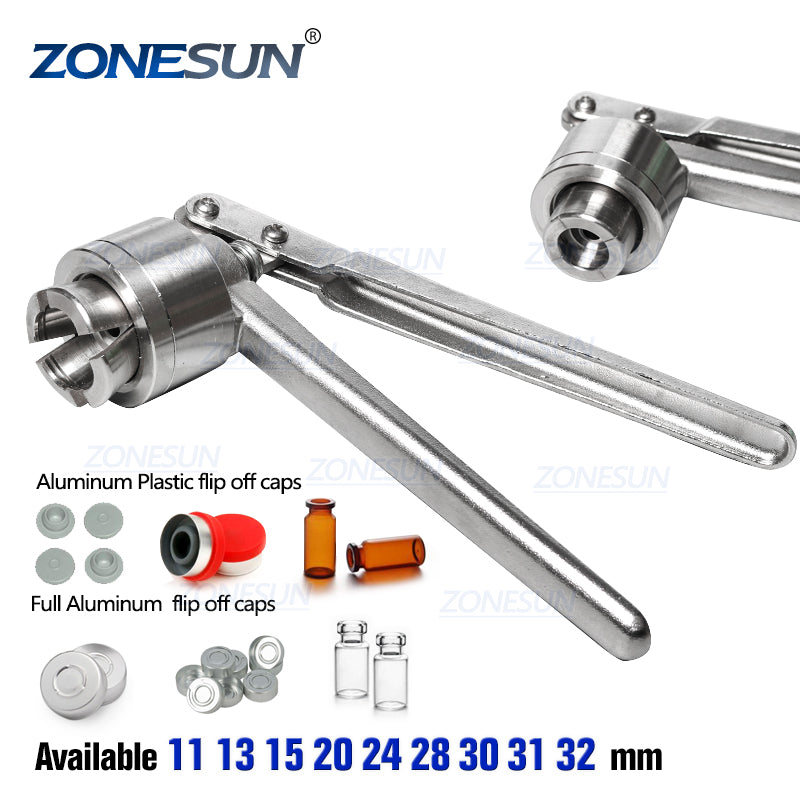
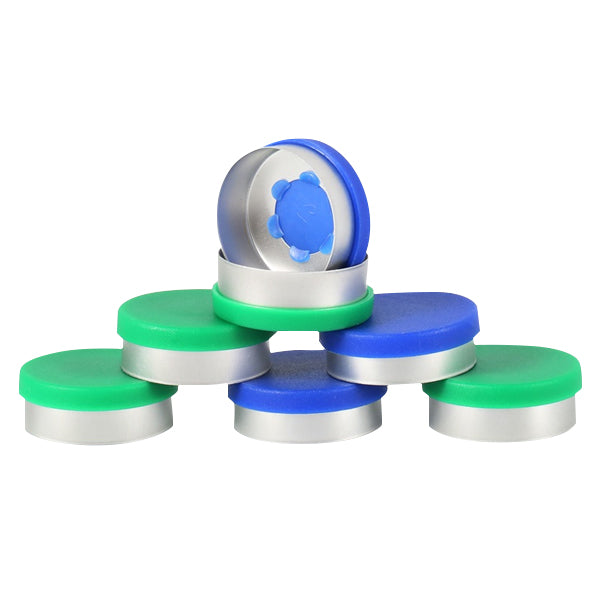
ZONESUN's vial capping machine generally refers to the equipment used for sealing pharmaceutical vials, instead of cryo vials, or essential sample vials capping equipment. The pharmaceutic vials are typically work with rubber stopper and aluminum flip-off caps. There are no threads on the vial neck, but there is a flange for securing the aluminum cap. When sealing the vial, the rubber stopper will be first pressed into the mouth, and then the capping head of the vial capping machine will crimp the lower edge of the aluminum caps, covering it under the flange, thus securing the stopper and maintaining a secure seal. If both the container and cap are threaded, a screw capper should be selected.



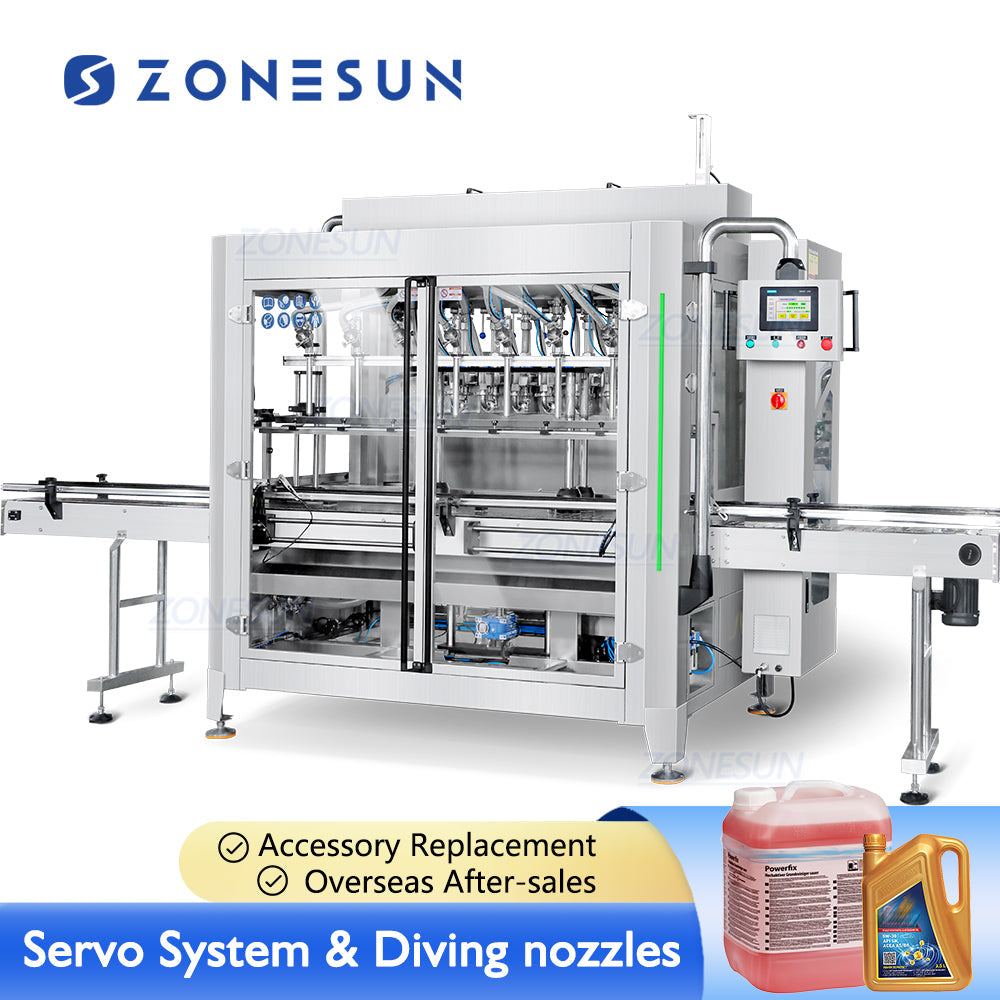
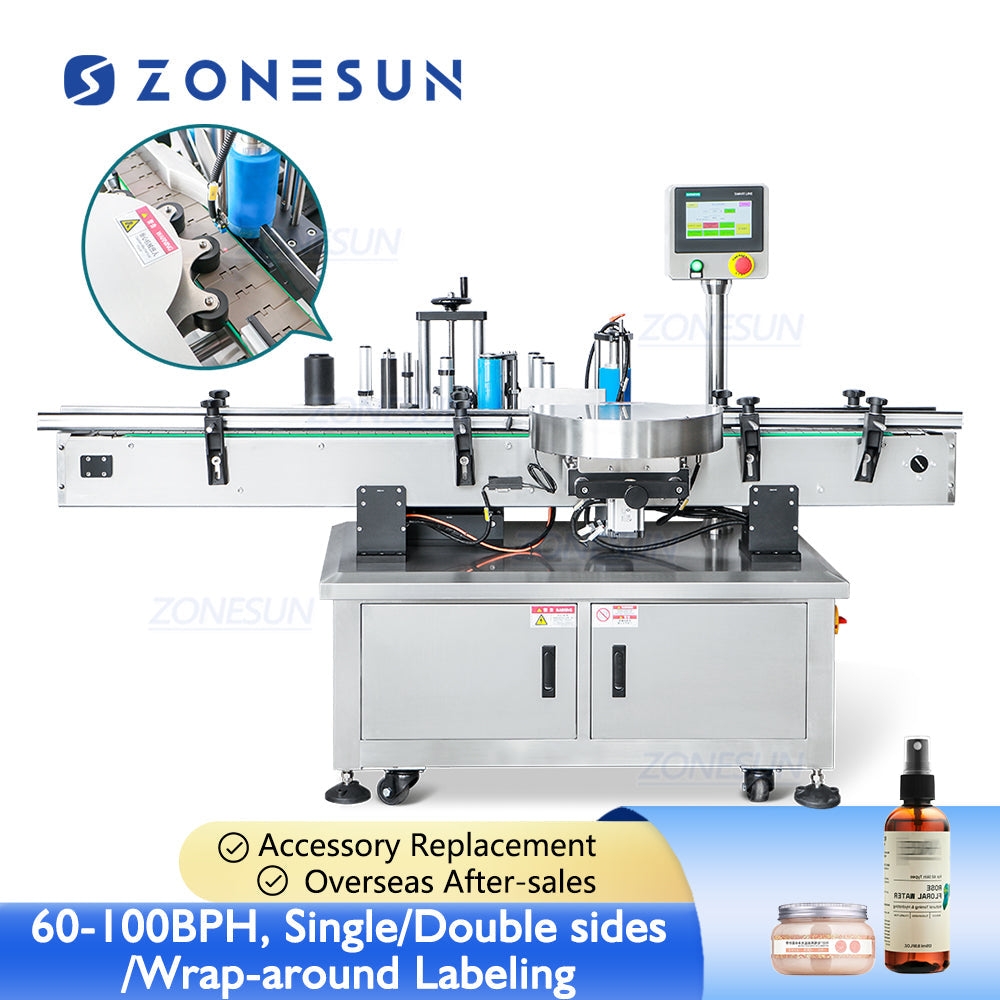
Popular Related Categories


Application of Vial Capping Machine
Most vial packaging equipment on the market adopts an monoblock design for filling, stoppering and crimping, stand-alone vial capping machine suits two type of users: one type is for developing, formulation testing or small batch trial production, where capping is processed separately after solution filling and stoppering. The other type of product requires lyophilization after filling and stoppering, after lyophilization and full stoppering, aluminum caps then sealed using separately vial capping machine.
Laboratory and Small-Batch Solutions
Mainly includes liquid solution, buffer solution, physiological saline, reagents, standard solutions, sample solutions, and small-batch drug formulations, suitable for research and development testing, stability testing, and pilot production.
Lyophilized Products
Mainly includes lyophilized powder injections, antibiotics, vaccines, biological agents, protein and peptide products, enzyme preparations, and some diagnostic reagents. These products are sensitive to moisture or temperature and usually require lyophilization after filling before stoppering and aluminum cap sealing.
How to Select a Vial Capping Machine
Although there are not many types of vial capping machines, there are still many details that need to be considered when selecting a suitable machine. In addition to machine price, working efficiency and capping result, it is also necessary to consider the installation environment, production scale, noise requirements, machine adjustment and changeover efficiency.
Production Space and Capacity Requirements
Some users choose a desktop vial capping machine to save production space. This type of machine has a small size and is easy to operate. It can complete vial capping independently and is suitable for small-batch laboratory testing or production with low capacity requirements.
Fully automatic machines usually integrate automatic vial feeding, cap feeding and capping processes. They take up more space but can reduce manual operation, making them more suitable for medium- or large-batch continuous production. At the same time, fully automatic machines have more complex structures, so the costs of machine adjustment, maintenance and size changeover are usually higher.
Noise Control Requirements
For laboratories, cleanrooms or other workplaces with environmental requirements, the noise generated during machine operation is also an important factor. Fully electric vial capping machines usually produce less noise and do not need an additional air compressor, making them more suitable for quiet working environments.
Fully automatic machines usually use a vibratory bowl feeder to automatically arrange and feed aluminum caps. Ordinary vibratory bowl feeders may produce obvious vibration and noise during operation. ZONESUN uses an electromagnetic vibratory bowl feeder, which can reduce operating noise while keeping stable cap feeding. It is more suitable for production environments with certain noise requirements.
Vial Capping Structure
Based on the capping structure of vial capping machines, both vial crimping heads and vial spinning heads can be used for sealing aluminum caps on pharmaceutical vials. Difference from them are the working methods and suitable applications.
Vial Crimping Heads
Working Principle: The vial crimping head is usually made of several crimping segments. During crimping, the vial lifting mechanism lifts the vial upward, allowing the aluminum cap to enter the crimping head and remain at the set height.After that, all crimping segments close inward at the same time, pressing the aluminum cap skirt toward the vial neck and wrapping it under the flange of the vial opening. In this way, the aluminum cap and rubber stopper are secured to complete the sealing process.
Advantages
- The structure is relatively simple, and the machine manufacturing cost is lower.
- Operation, adjustment and later maintenance are more convenient.
- By changing to a vial crimping head of the corresponding size, the machine can work with aluminum caps of different diameters.
- It is suitable for laboratories, small-batch production and low- to medium-speed production.
Disadvantages
- Since several crimping segments press the aluminum cap at the same time, segmented marks may appear on the cap skirt. The sealing appearance is not as smooth as that produced by a vial spinning head.
- If the crimping head size or closing amount is not suitable, it may cause an uneven cap skirt, wrinkles, tilted caps or inconsistent sealing tightness.
- Vial crimping heads usually produce fewer aluminum particles during capping. However, some particles may remain inside the crimping head and affect the accuracy of the following capping operations.
- In high-speed continuous production, sealing consistency and the potential for increasing production capacity are relatively limited.
Vial Spinning Heads
Working Principle: The vial spinning head usually uses a pressing head to press the aluminum cap and rubber stopper downward from the top. Three rollers then move around the aluminum cap and gradually roll the cap skirt inward, allowing it to wrap evenly under the flange of the vial opening.
Advantages
- The aluminum cap skirt is usually flatter, and the crimping around the cap is more even.
- Continuous rolling can reduce the instant pressure applied to the aluminum cap, making scratches and aluminum particles easier to control.
- It is more suitable for injections, vaccines, lyophilized powders and other products with higher sealing quality requirements.
- It can be designed with multiple spinning heads in a continuous rotary structure, making it more suitable for medium- and high-speed production lines.
Disadvantages
- Compared with vial crimping heads, when changing to another cap size, the vial spinning head may require replacement of the pressing head and adjustment of the roller positions. Therefore, the adjustment process is more complicated.
- The rollers may scrape the aluminum cap during spinning, making aluminum particles more likely to be generated during the capping process.
Common Challenges & Solutions of Vial Capping Machine
1. Wrinkled, Raised and Uneven Aluminum Caps
For solving problems such as wrinkles, raised edges and uneven appearance, the crimping structure of a vial capping machine cannot be designed only according to the aluminum cap diameter. The overall aluminum cap size, aluminum thickness, aluminum cap skirt length, vial flange height and total vial height with the stopper inserted should be considered as well.
ZONESUN's crimping structure adopts the action of pressing first and then crimping. During crimping, the aluminum cap is pressed stably on the rubber stopper to ensure that the rubber stopper maintains stable axial compression. Then, the aluminum cap skirt is folded under the vial flange. This can reduce problems such as wrinkles, raised edges and uneven appearance caused by an unstable aluminum cap position.
2. Jammed, Reversed and Missing Caps
For solving problems such as jammed caps, reversed caps and unstable cap feeding, the vibratory bowl feeder and cap feeding rail cannot be designed only according to the aluminum cap diameter. The total cap height, skirt length, aluminum thickness, flip-off top structure, center of gravity and size tolerance should also be considered. The bowl track, cap sorting structure and guiding rail need to be adjusted according to actual aluminum cap samples, so reversed caps can be removed correctly, and cap jams or interrupted cap feeding can be reduced.
This is why ZONESUN requires customers to provide at least several hundred aluminum caps used in actual production before manufacturing a customized vial capping machine. Customers also need to provide cap dimension drawings, samples from normal production batches and samples close to the upper and lower size limits. These samples are used to test and adjust the cap feeding structure.
A special photoelectric sensor is installed at the cap guiding rail. When the sensor detects that there are not enough caps inside the rail, the vibratory bowl feeder will start automatically to continue sorting and supplying caps.
3. Slow Continuous Running Speed
Some vial capping machines on the market may have unstable cap sorting and placing, unsmooth vial feeding, vial jams or even vial breakage during continuous operation. These problems can cause frequent machine stops and reduce the overall running speed.
Based on the problems found during previous machine testing and actual applications, ZONESUN has improved the vibratory bowl feeder and cap placing structure, making aluminum caps enter the capping station more smoothly. The starwheel positioning structure and program movements are also improved to make vial feeding, positioning and discharging smoother.
After stable vial feeding, cap placing and positioning are achieved, a suitable number of capping heads can be customized according to the required production capacity. This allows the vial capping machine to maintain stable and faster continuous production.
4. Cleaning Requirements and GMP-Oriented Design
Vial capping machines are mainly used in pharmaceutical, healthcare product and biotechnology industries. These industries usually have higher requirements for machine materials, production environments and cleanliness. Therefore, many users pay special attention to whether the machine is suitable for their industry standards and production environments.
ZONESUN vial capping machines are mainly made of SUS304 or SUS316 stainless steel according to production requirements. An optional Class 100 laminar flow hood and transparent dust cover can also be added to improve the cleanliness of the capping area and reduce the entry of external dust and contaminants.
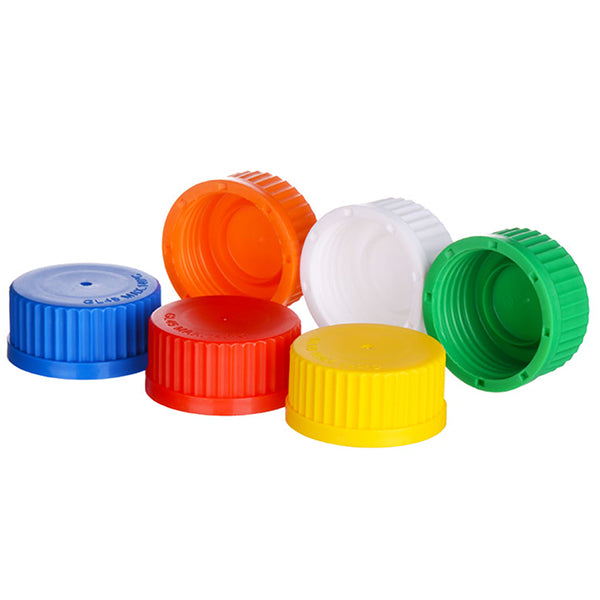
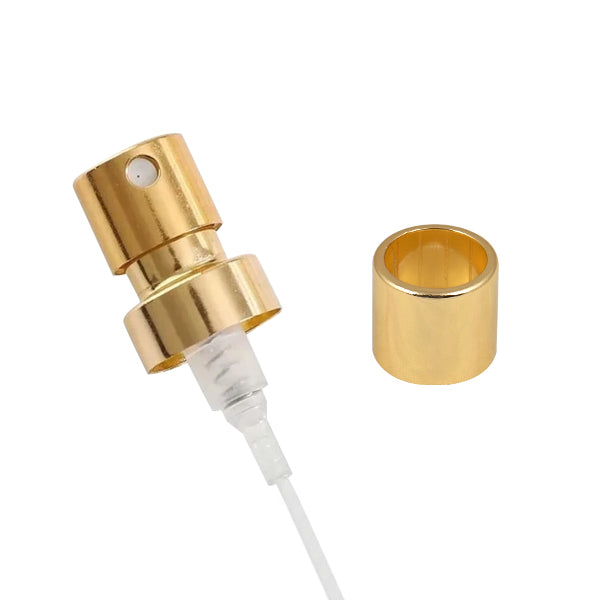
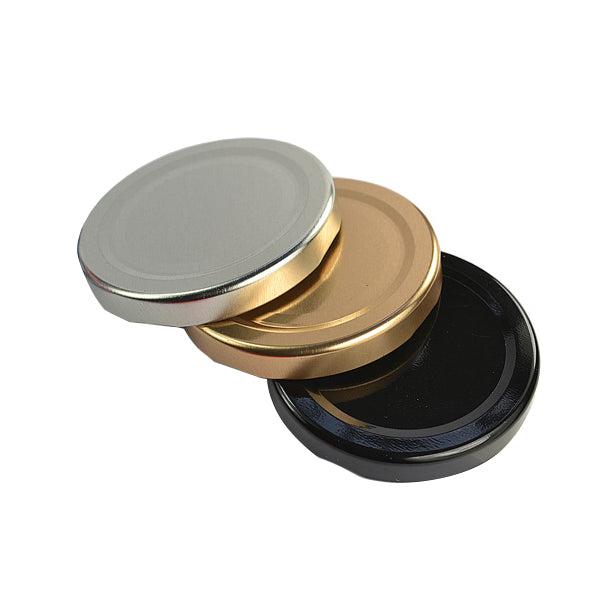
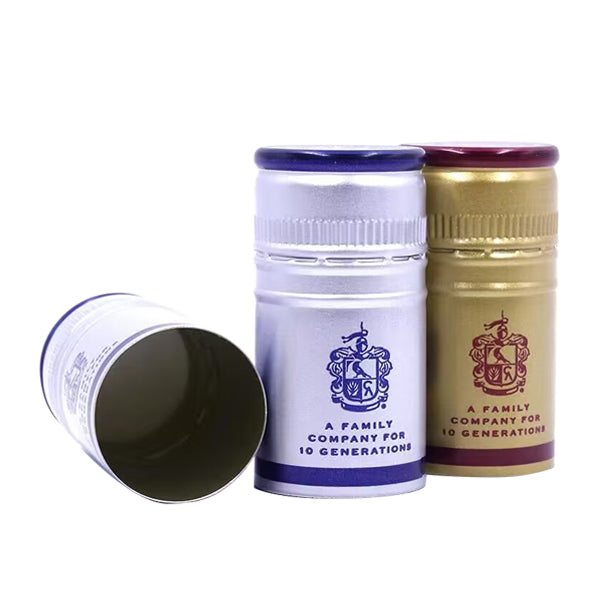
Capper For Different Caps Type




From the Blog
Zobacz wszystkie


