



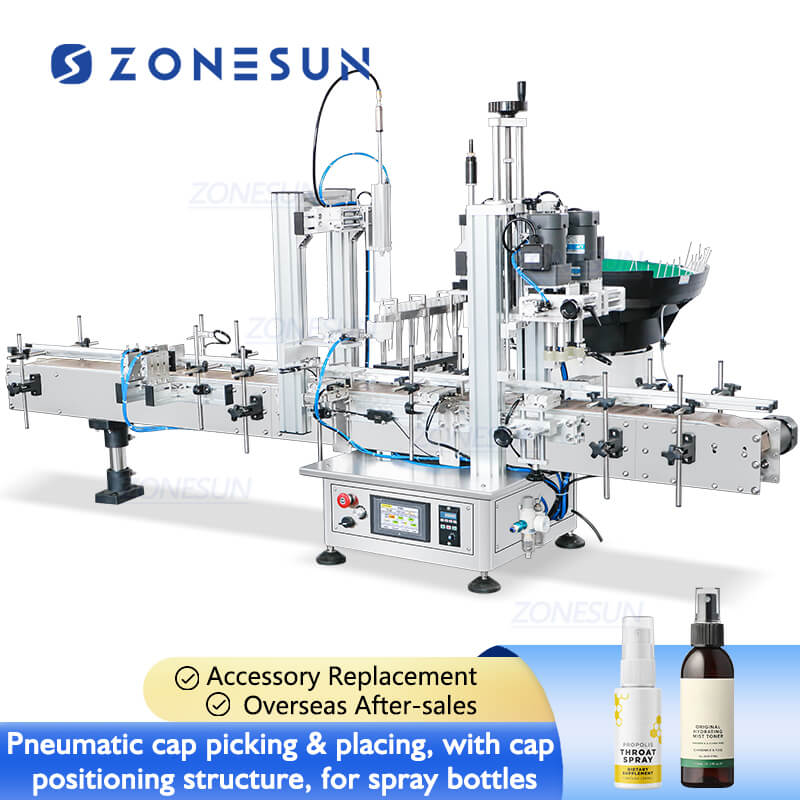
How to Reduce Product Changeover Time on a Packaging Machine
1. What Is Product Changeover?
Product changeover means prepping a packaging machine for a different product, package size, or format. Not a one-size-fits-all process — it shifts depending on what’s changing.
A changeover gets triggered by:
- Changing from one product to another
- Changing the filling weight
- Changing bag dimensions
- Changing bottle sizes
- Changing container shapes
- Changing labels
- Changing sealing parameters
- Changing packaging materials
- Switching between different production orders
Take two examples:
- Product A: 100 g snack → 100 g pouch
- Product B: 500 g snack → 500 g pouch
Same machine, different demands. Operators adjust the weighing system, the bag-forming structure, sealing position, and other parameters — sometimes all at once.
Speed alone doesn’t make a good packaging machine. Changeover efficiency matters just as much.
2. Why Does Packaging Machine Changeover Take So Long?
Before jumping to solutions, it helps to see where the time actually goes.
Cleaning
Different products — food, pharmaceutical, cosmetic, chemical — often mean product-contact components need cleaning first.
Switching between powders, for instance, might require cleaning:
- Hopper
- Feeding screw
- Filling nozzle
- Product chute
- Weighing components
Easier removal, easier cleaning. Shorter changeover follows from that, more or less directly.
Mechanical Adjustment
Older machines often need manual adjustment across:
- Guides
- Conveyors
- Filling nozzles
- Sealing jaws
- Forming collars
- Sensors
- Product positioning mechanisms
Tools required, trial-and-error repeated — changeover slows fast under those conditions.
Parameter Adjustment
Products and package sizes shift these values too:
- Filling volumes
- Filling speeds
- Conveyor speeds
- Sealing temperatures
- Sealing times
- Cutting positions
- Labeling positions
Manual entry, every time, adds setup time. It adds error risk too.
Testing
Adjustments finish, then operators run several packages and check them. Something’s off — more adjustment follows.
Changeover time isn’t only adjustment, in other words. Testing and fine-tuning count too.

3. Use Recipe Management to Save Machine Parameters
Recipe management is one of the more straightforward fixes here.
PLC-equipped machines with touchscreens can store production parameters directly.
| Product | Filling Weight | Speed | Sealing Temperature |
|---|---|---|---|
| Product A | 100 g | 45 bags/min | 170°C |
| Product B | 250 g | 40 bags/min | 175°C |
| Product C | 500 g | 30 bags/min | 180°C |
Operators select a recipe instead of entering values by hand. Repeated changeovers get simpler this way.
What recipe management does:
- Reduces parameter entry
- Reduces setup errors
- Makes repeated orders easier
- Improves consistency between runs
- Cuts operator training requirements
Manufacturers running multiple SKUs on one machine benefit most here.

4. Choose Tool-Free or Quick-Release Components
Mechanical adjustment eats time — often more than people expect.
Several tools, several steps: even a small change stretches out.
Tool-free adjustment and quick-release components shorten that process. Machines apply this to:
- Bag guides
- Product guides
- Filling nozzles
- Sealing components
- Labeling components
- Conveyor guides
No full disassembly needed. Release, reposition, lock — done.
Especially useful for similar formats with different dimensions.

5. Use Adjustable Machine Structures
Multiple package sizes need enough adjustment range built in.
A pouch machine, say, handling:
- 100 × 150 mm pouch
- 150 × 200 mm pouch
- 200 × 300 mm pouch
Adjustable guides and sealing positions let operators switch sizes without swapping parts constantly.
Bottle machines work the same way. Adjustable:
- Bottle guides
- Nozzle positions
- Conveyor width
- Filling height
- Labeling position
One machine, several container sizes — that’s the goal.
6. Minimize Format Parts When Possible
Some machines need different format parts per size. These include:
- Forming components
- Guides
- Sealing jaws
- Star wheels
- Filling nozzles
- Clamping components
A fully separate part set per product complicates everything.
So when customizing a machine, shared components across products are worth considering.
Three bottle sizes sharing one filling nozzle, needing only guide adjustment — that removes a swap step from every changeover.
Customization earns its value here.
7. Make Product-Contact Parts Easy to Remove
Frequent cleaning makes accessibility critical.
A machine can be easy to clean in theory. In practice, screws and components slow that down if removal is a hassle.
Better design usually includes:
- Quick-release clamps
- Removable hoppers
- Easy-access filling nozzles
- Smooth product-contact surfaces
- Fewer difficult-to-reach areas
Switching food products often means removing the hopper, cleaning contact parts. Easier removal, shorter changeover — the same pattern holds.
8. Use Automatic Parameter Adjustment
More advanced systems can automate parts of this.
Rather than manual adjustment across every mechanism, the machine moves components to preset positions on its own.
The flow looks like: Product Recipe → PLC → Servo Positioning → Machine Adjustment.
Automatic adjustments can cover:
- Conveyor width
- Filling position
- Product positioning
- Labeling position
- Sealing position
- Servo-controlled mechanisms
Machines running many SKUs benefit most from this.
9. Standardize Your Packaging Formats
Sometimes the real fix sits outside the machine entirely — in the packaging design.
Say a company runs five pouch widths:
- 145 mm
- 150 mm
- 152 mm
- 155 mm
- 160 mm
Small gaps, but they still trigger extra adjustments or extra parts.
Standardizing down to fewer specs cuts machine changes.
- Before: 5 pouch widths
- After: 2 standardized pouch widths
That simplifies:
- Machine setup
- Packaging material purchasing
- Operator training
- Spare parts management
- Production scheduling
10. Group Similar Products Together
Scheduling itself can cut changeover frequency.
Instead of: Product A → Product B → Product A → Product C → Product B
Try: Product A → Product B → Product C — or group by similarity.
A food manufacturer, for instance, might run: Small packages → Medium packages → Large packages, rather than bouncing between sizes repeatedly.
This is changeover optimization through scheduling. The goal isn’t just shorter individual changeovers. It’s fewer changeovers overall.
11. Use Automated Cleaning Where Appropriate
Liquid and viscous products often lose serious time to cleaning.
Automated or semi-automated systems can help, depending on the setup:
- CIP systems
- Automatic flushing
- Removable filling systems
- Dedicated cleaning circuits
The right method depends heavily on the product, though. A food sauce line and a pharmaceutical line don’t share cleaning requirements — treating them the same is a mistake.
12. Improve Operator Guidance
Ease of operation shapes changeover time too.
A touchscreen can walk operators through:
- Step-by-step changeover instructions
- Parameter presets
- Alarm messages
- Adjustment instructions
- Recipe selection
- Maintenance reminders
A typical sequence:
- Step 1: Select Product B
- Step 2: Replace filling nozzle
- Step 3: Adjust bottle guide
- Step 4: Confirm sealing temperature
- Step 5: Start test run
Standardized this way, changeover works better across multiple operators on the same line.
13. Use Sensors to Reduce Manual Positioning
Sensors cut down setup and adjustment work.
Depending on the machine, they detect:
- Product position
- Bottle presence
- Bag position
- Label position
- Product height
- Cap presence
A bottle labeling machine, for example — an adjustable photoelectric sensor detects bottle position, triggers labeling at the right moment.
Less manual positioning, less repeated testing. Changeover shortens as a result.
14. Design the Machine Around Your Actual Products
No universal changeover setup fits every manufacturer.
One product, one package size — that’s a different machine than one running 20 SKUs across five package sizes.
Before buying or customizing, gather:
Product Information
- Product type
- Product dimensions
- Weight
- Density
- Viscosity
- Particle size
- Flowability
- Fragility
Packaging Information
- Bag or container type
- Packaging dimensions
- Filling volume
- Packaging material
- Sealing method
Production Information
- Products/SKUs
- Target output
- Working hours
- Changeover frequency
- Expected future products
This lets the manufacturer decide what should be adjustable, interchangeable, or automated.
15. Customized Packaging Machines Can Reduce Changeover Time
Unusual products, frequent SKU changes — a custom machine often beats a standard one here.
Take a manufacturer running:
- 100 g snack pouches
- 250 g snack pouches
- 500 g snack pouches
- 1 kg snack pouches
The machine could combine:
- Adjustable bag guides
- Servo-controlled positioning
- Recipe management
- Quick-release components
- Shared format parts
- Automatic parameter adjustment
Not about adding complexity for its own sake. About making the operator’s job simpler.
16. A Practical Changeover Optimization Strategy
Breaking changeover into stages helps analyze it:
Cleaning → Mechanical Adjustment → Parameter Setting → Format Change → Test Run → Production
Then measure time per stage.
| Changeover Step | Current Time | Target Time |
|---|---|---|
| Cleaning | 10 min | 7 min |
| Mechanical Adjustment | 12 min | 5 min |
| Parameter Setting | 5 min | 1 min |
| Format Change | 8 min | 4 min |
| Test Run | 5 min | 2 min |
| Total | 40 min | 19 min |
More useful than just saying “we need a faster machine.” Find where the downtime sits, then fix that specific step.
Conclusion
Cutting changeover time isn’t just about production speed.
A high-speed machine needing 40 minutes to switch products may run less productive, overall, than a slower one finishing the same changeover in 15.
The strategies that actually work:
- Recipe management
- Tool-free adjustment
- Quick-release components
- Adjustable machine structures
- Easy-to-clean product-contact parts
- Automatic parameter adjustment
- Standardized packaging formats
- Better production scheduling
- Operator guidance
- Sensor-based positioning
- Customized machine design
So the question isn’t only “how fast can the machine run?” It’s also “how quickly can we switch from one product to another?”
For manufacturers running multiple SKUs, faster changeover means better equipment utilization, simpler production management, and a more flexible line overall.
For more questions regarding machine selection, please visit ZONESUNTECH.
Lasă un comentariu