


¿Qué es una máquina formadora de cajas de cartón y cómo funciona?
La formación de cajas de cartón parece sencilla. Abra un espacio en blanco plano, dóblelo en forma cuadrada, selle la parte inferior, déjelo a un lado y repita. En volúmenes bajos, un operador lo maneja sin quedarse atrás. En volúmenes elevados, esa misma tarea se convierte en la razón por la que espera la línea de llenado.
Una máquina formadora de cajas de cartón elimina esa limitación. Se introducen espacios planos y se sacan cajas formadas y selladas, de forma continua y a la velocidad de la línea.
Esta guía cubre cómo funcionan estas máquinas, dónde se utilizan y qué evaluar antes de comprar una.

¿Qué es una máquina formadora de cajas de cartón?
Una máquina formadora de cajas, también llamada formadora de cajas, formadora de cajas o máquina abridora automática de cajas, toma espacios en blanco corrugados planos y los convierte en cajas selladas y completamente formadas, listas para cargar el producto. Ese es todo el trabajo. Todo lo demás en la línea de envasado supone que ya está hecho.
La máquina realiza automáticamente las siguientes operaciones:
- Recogida de cajas
- Apertura de caja
- Plegado de solapa inferior
- formación de cajas de cartón
- Sellado inferior
Una vez montadas, las cajas pueden pasar directamente a las operaciones de llenado, embalaje de cajas o paletizado.
Las máquinas formadoras de cajas de cartón se utilizan ampliamente en:
- Envasado de alimentos
- producción de bebidas
- Fabricación farmacéutica
- Envases de cosméticos
- Cumplimiento del comercio electrónico
- Centros de distribución logística

¿Por qué los fabricantes utilizan máquinas formadoras de cajas de cartón?
La formación manual de cajas crea un tipo específico de problema de producción, uno que empeora a medida que aumenta el volumen. La tarea en sí no se ralentiza gradualmente; choca contra una pared. Un operador que forma cajas de cartón a mano solo puede moverse con cierta velocidad, y en el momento en que ese ritmo se queda atrás de la línea de llenado, todo lo que está arriba se retrasa.
Producción que se mantiene al día con la línea
Una máquina formadora automática forma cajas de cartón continuamente, sin pausas ni variaciones de ritmo entre el inicio y el final de un turno. El equipo de llenado posterior funciona a su velocidad nominal en lugar de esperar el suministro de cartón.
Mano de obra redirigida hacia donde agrega más valor
Una máquina reemplaza una estación dedicada a la formación de cajas de cartón. Los operadores que anteriormente estaban en esa estación no desaparecen: pasan a tareas que requieren juicio en lugar de repetición. El costo de la mano de obra en ese punto de la línea cae; el valor de la plantilla restante aumenta.
Cajas que siempre salen cuadradas
El plegado manual introduce variación: una caja ligeramente descuadrada causa problemas en la estación de sellado, en el transportador o cuando se apila en una plataforma. El plegado automatizado mantiene las dimensiones consistentes en todo el recorrido, lo que es más importante cuando las cajas se mueven hacia equipos automatizados posteriores que asumen una geometría de caja específica.
Menos lesiones por esfuerzos repetitivos
Doblar y pegar cajas de cartón repetidamente durante un turno completo es exactamente el tipo de tarea que acumula riesgo de lesiones con el tiempo. Eliminarlo de la carga de trabajo manual no solo reduce la plantilla en esa estación, sino que también elimina una fuente conocida de reclamaciones por tensiones repetitivas de la instalación.
¿Cómo funciona una máquina formadora de cajas de cartón?
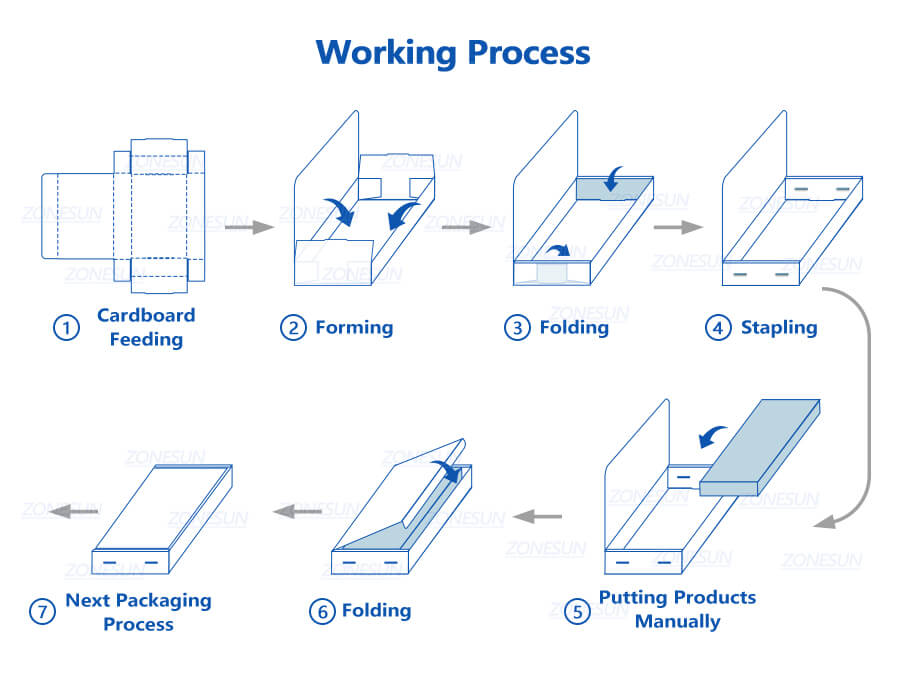
La mayoría de las montadoras automáticas siguen la misma secuencia. El enfoque mecánico varía (servo, neumático o híbrido), pero los pasos no.
Paso 1: carga de cartón
Los espacios en blanco planos se apilan en una revista. El cargador se alimenta continuamente, lo que significa que el operador carga una vez y se marcha, no una vez por caja.
Paso 2: Recogida de cajas
Un espacio en blanco a la vez. Un sistema de succión al vacío lo extrae de la pila; Mecanismos servo o neumáticos controlan la separación. El requisito crítico aquí no es la velocidad, sino la confiabilidad. Una alimentación doble o una recogida perdida detiene la línea.
Paso 3: Apertura de la Caja
El espacio en blanco pasa de ser plano a tener una forma tridimensional. Los carriles guía y los brazos formadores lo mantienen allí durante la expansión. Sin ese soporte, la caja se asienta de manera desigual y una caja fuera de escuadra causa problemas en cada paso posterior.
Paso 4: Plegado de la solapa inferior
La secuencia importa. Se dobla fuera de orden y las solapas se superponen incorrectamente: la parte inferior no queda plana, el sello no se sostiene y la caja falla antes de cargarla. Actuadores neumáticos, brazos mecánicos o sistemas servoaccionados ejecutan el pliegue según el diseño de la máquina.
Paso 5: Sellado inferior
Cinta, adhesivo termofusible o pegamento: el método depende de la aplicación y de las compensaciones de mantenimiento que conlleva cada sistema. La caja sale de esta estación sellada y lista. Se descarga sobre el transportador.
Paso 6: Transferencia a la línea de envasado
Empaquetadora de cajas, máquina estuchadora, sistema de llenado, cargador robótico: lo que viene a continuación en la línea recibe una caja de cartón cuadrada y sellada. A partir de aquí el trabajo del montador queda hecho. Lo que transfiere determina la fluidez con la que se ejecuta todo lo posterior.
¿Qué tipos de máquinas formadoras de cajas de cartón están disponibles?
Máquinas formadoras de cajas de cartón semiautomáticas
El operador coloca los espacios en blanco y la máquina se encarga del plegado y sellado. Dos personas haciendo el trabajo de lo que de otro modo requeriría más, pero el elemento humano permanece al tanto. Esto es adecuado para pequeñas empresas, tiradas de bajo volumen y operaciones de nueva creación donde el costo de capital de la automatización total aún no está justificado por el resultado.
Máquinas formadoras de cajas de cartón completamente automáticas
Alimentación del cartón hasta la descarga: no hay participación del operador en la secuencia de formación. La máquina funciona a la velocidad de la línea, no al ritmo de quien esté a su lado. Diseñado para fabricación de gran volumen, líneas de embalaje automatizadas y centros de distribución donde el montador necesita mantenerse al día con todo el proceso sin convertirse en una limitación.
Formadoras de cajas de cartón servoaccionadas de alta velocidad
Servomotores, control PLC, sensores de precisión: la combinación lleva la velocidad y la precisión posicional más allá de lo que ofrecen los sistemas neumáticos estándar. La caja que sale es más consistentemente cuadrada, más consistentemente sellada y llega a la siguiente estación con menos variación entre ciclos.
Fábricas de alimentos, plantas de bebidas, producción farmacéutica, cumplimiento de comercio electrónico: estos entornos comparten un requisito: el montador no puede ser la razón por la que la línea se ralentiza.
¿Qué características deberían buscar los compradores?
Rango de tamaño de cartón
Las dimensiones actuales son el punto de partida, no la única consideración. Una máquina que maneja la gama de cajas de cartón actual pero que no puede acomodar un formato ligeramente mayor en dos líneas de productos a partir de ahora obliga a tomar una decisión sobre el equipo antes de lo esperado. Confirme el rango de tamaño completo (mínimo y máximo) antes de comprar.
Capacidad de producción
La velocidad del montador debe coincidir con la del equipo aguas abajo, no excederla ni quedarse corta. Una montadora que funciona más lentamente que la línea de llenado crea una brecha en el suministro. Uno que funciona significativamente más rápido desperdicia capacidad. El número que debe coincidir es el requisito posterior, no la cifra más alta en la hoja de especificaciones.
Tiempo de cambio
Para operaciones que ejecutan múltiples tamaños de cajas, la velocidad de cambio es tan importante como la velocidad de formación. Los ajustes sin herramientas, el almacenamiento de recetas mediante PLC y las guías ajustables comprimen el tiempo entre la última caja de un formato y la primera del siguiente. Sin ellos, cada cambio de tamaño se convierte en una parada de producción medida en horas en lugar de minutos.
Sistema de control
Control PLC, pantalla táctil HMI, tecnología de servomotor, diagnóstico remoto: estas no son características para marcar en una lista. Determinan la rapidez con la que se identifica una falla, la facilidad con la que un operador cambia entre formatos y si un técnico puede diagnosticar un problema de forma remota en lugar de esperar una visita al sitio. Cada uno tiene una implicación práctica que se refleja en el tiempo de actividad, no sólo en la comparación de especificaciones.
Método de sellado
La cinta y el adhesivo termofusible no son intercambiables: la elección correcta depende del diseño de la caja, las condiciones de envío y las compensaciones de mantenimiento. El termofusible crea una unión más fuerte y se adapta a cargas más pesadas o tránsitos más prolongados, pero requiere elementos calefactores y una limpieza regular. El sellado con cinta es más sencillo de mantener, pero menos adecuado para entornos de alta humedad o cajas de cartón sometidas a una presión de apilamiento significativa.
Preguntas comunes que hacen los compradores
¿Cuánta mano de obra puede ahorrar una máquina formadora de cajas de cartón?
Depende de la operación. Una instalación que ejecute un turno con un volumen moderado podría eliminar una posición de formado dedicada. Una operación de tres turnos con un gran volumen podría eliminar a tres o más. La variable no es la máquina, sino cuántas horas por día se ejecuta actualmente la tarea de formado manual y cuántas personas se necesitan para mantener el ritmo.
¿Qué precisión tiene la formación automática de cajas de cartón?
Los sistemas servoaccionados mantienen las dimensiones de las cajas de cartón de manera lo suficientemente consistente como para que los equipos posteriores (empacadoras de cajas, cargadores robóticos, sistemas transportadores) puedan manejarlas sin ajustes entre ciclos. La medida práctica no es una cifra de tolerancia; se trata de si las cajas que llegan a la siguiente estación son cuadradas y están lo suficientemente bien selladas para moverse sin causar atascos o rechazos.
¿Puede una máquina manejar diferentes tamaños de cajas de cartón?
Sí, dentro de un rango definido. La mayoría de las montadoras industriales admiten configuraciones de tamaño ajustables, pero el tiempo de cambio entre formatos varía significativamente según el modelo. Una máquina con ajustes sin herramientas y almacenamiento de recetas PLC cambia de formato en minutos. Uno sin esas características podría tardar mucho más.
¿Cuál es la diferencia entre una formadora de cajas y una máquina estuchadora?
Diferentes máquinas, diferentes trabajos. Una máquina formadora de cajas forma cajas de envío corrugadas a partir de espacios planos: las cajas exteriores que se colocan en paletas y camiones. Una máquina estuchadora inserta productos en cajas de venta minorista o cajas plegables (las cajas que van en los estantes). Nombres similares, puntos completamente separados en la línea de envasado.
¿Por qué elegir? ZONESUN ¿Soluciones para el montaje de cajas de cartón?
ZONESUNEl equipo formador de cajas de cartón de está diseñado para funcionar junto con los sistemas de llenado, etiquetado, encartonado y empaquetado de cajas, no como una compra independiente, sino como un componente de una línea que necesita moverse a una velocidad constante de un extremo al otro.
Producción de alimentos, cumplimiento del comercio electrónico, actualizaciones de líneas existentes: el punto de partida es el mismo de todos modos. Envíe los detalles: dimensiones de la caja, producción requerida, configuración actual de la línea. La recomendación de equipo se deriva de esos detalles, no de una coincidencia del catálogo.
Explora nuestro máquina formadora de cajas de cartón gama para encontrar configuraciones adecuadas a sus requisitos de escala de producción y formato.
Conclusión
La formación de cajas de cartón se sitúa al inicio de la secuencia de embalaje secundario y, cuando es manual, marca el ritmo de todo lo que sigue. Automatizarlo no sólo elimina un costo laboral. Se quita el techo.
Rango de tamaño, capacidad de producción, requisitos de cambio, sistema de control, integración con equipos posteriores: estos son los datos que determinan si la máquina se adapta a la operación durante tres años o necesita ser reemplazada en uno. Acertar con ellos en el momento de la compra es más barato que corregirlos después.
La máquina formadora de cajas adecuada no se anuncia en la hoja de especificaciones. Se muestra en cómo discurre el resto de la línea.
Explora más investigaciones
Máquina estuchadora horizontal versus vertical: ¿cuál debería elegir?
Diferencias entre envases termorretráctiles y envases de cartón y cómo elegir la solución adecuada
Dejar un comentario