



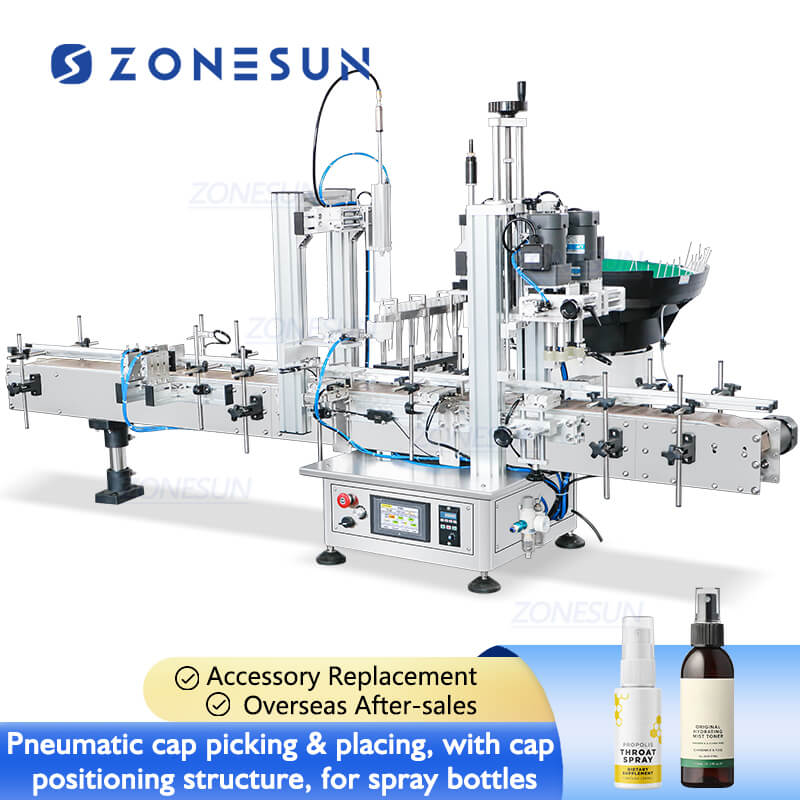
¿Para qué se utiliza una máquina taponadora?
Cuando se trata de envases lentos, tapas sueltas, botellas con fugas y trabajadores que parecen tener su propia forma "única" de hacer las cosas, y todavía se pregunta: "Entonces... ¿para qué sirve exactamente una máquina taponadora?" - Probablemente sea hora de conocer la máquina taponadora.
¿Qué es una máquina taponadora?
Una máquina taponadora es un dispositivo de envasado que se utiliza para apretar o aflojar de forma automática y precisa las tapas o cierres de botellas, frascos y contenedores.
Puede ayudar a los fabricantes a:
- Mejorar la consistencia del sellado
- Reducir los costos laborales
- Aumentar la velocidad de producción
- Lograr una producción automatizada

¿Cómo funciona una máquina taponadora?
Una máquina taponadora (que generalmente incluye diferentes tipos, como taponadoras de rosca, taponadoras de prensa y taponadoras de tapón; aquí tomamos como ejemplo la máquina taponadora de rosca automática más común) opera a través de un proceso electromecánico preciso. Su objetivo principal es levantar con precisión la tapa y apretarla en el cuello de la botella con un par preestablecido, asegurando un sello seguro y confiable.
A continuación se muestra el proceso de trabajo detallado, generalmente dividido en varias etapas clave:
1. Alimentación con biberón y posicionamiento
Las botellas llenas se transportan a lo largo de la línea de producción mediante un transportador o rueda de estrella y se entregan a la estación de taponado a intervalos fijos.
Luego, las guías o dispositivos de sujeción centran y estabilizan cada botella, asegurándose de que la boca de la botella esté colocada con precisión.
2. Alimentación y clasificación de tapas
Alimentación de tapas
Las tapas se vierten a granel en una tolva o se levantan mediante un ascensor.
Clasificación de tapas
Este es un paso clave. La tolva está conectada a un clasificador de tapas, que utiliza pistas giratorias, cuencos vibratorios electromagnéticos o placas giratorias especialmente diseñadas para orientar las tapas de modo que todas estén alineadas en la posición correcta, generalmente "con la apertura hacia abajo".
Entrega de gorras
Después de ser clasificadas, las tapas viajan a través de un conducto o transportador aéreo y se entregan de manera ordenada a la posición de recogida debajo del cabezal taponador.
3. Recogida y alineación de la tapa
recogida
El componente central de la máquina taponadora, el cabezal taponador (a menudo varios dispuestos en un disco giratorio), desciende hasta el punto de recogida. Cada cabezal taponador está equipado con pinzas mecánicas o un cabezal magnético que sujeta y sujeta firmemente una sola tapa.
Alineación
Luego, el cabezal taponador se mueve sobre la botella y comienza a descender. Gracias a su estructura flotante y autoajustable, incluso si la boca de la botella está ligeramente desalineada, los resortes y los mecanismos de compensación ayudan a guiar correctamente el tapón hacia la botella.
4. Apretar (el paso más crítico)
Presione y participe
El cabezal taponador presiona hacia abajo para que la tapa quede al ras de la boca de la botella. Al mismo tiempo, el embrague interno y el limitador de par se activan y se ponen a trabajar.
Empezar a girar
El eje del cabezal taponador comienza a girar, haciendo girar la tapa junto con él.
Sigue los hilos
Guiada por las roscas de la botella, la tapa gira y se desplaza suavemente hacia abajo hasta que queda completamente asentada.
Control de par
Una vez que la tapa está completamente apretada, la resistencia salta. En el momento en que se alcanza el par preestablecido, el embrague patina (o un sensor envía una señal) para detener la rotación. Esto garantiza que cada tapa esté bien ajustada: no demasiado floja (para que no gotee) ni demasiado apretada (para que nada se agriete ni se deforme).
Liberar y restablecer
Después de apretar, el cabezal taponador deja de girar, se levanta, suelta la tapa y se reinicia, listo para la siguiente botella.
5. Descarga
Las botellas tapadas son transportadas fuera de la estación mediante el transportador y pasan al siguiente proceso, como el etiquetado, la codificación o el embalaje en cajas.
¿Cómo funcionan los diferentes tipos de máquinas tapadoras?
Tapadoras de prensa (como las tapas de corona de la cerveza o los refrescos):
La tapa se coloca encima de la botella y un cabezal de presión desciende hacia abajo con gran fuerza. Aprieta el borde dentado de la tapa de la corona alrededor del borde de la botella y la bloquea firmemente en su lugar.
Tapadoras de tapones (para cosas como tapones de perfume o corchos de vino):
Una varilla mecánica empuja el tapón interior o el corcho directamente hacia la boca de la botella para que se asiente firmemente en el interior.
Tapadoras de engarce (para tapones de aluminio en frascos médicos, por ejemplo):
Primero se coloca la tapa de aluminio en la botella. Luego, un conjunto de pequeños rodillos presionan desde los lados, remodelando el faldón de la tapa para que se ajuste firmemente debajo de la rosca o el borde de la botella.
Factores clave a considerar antes de comprar
Procesos centrales y factores de combinación de productos
Características del contenedor
Botellas:
Material (vidrio, PET, HDPE, metal), forma (redonda, cuadrada, irregular), altura, diámetro y tamaño de la boca de la botella (acabado de cuello estándar o boca ancha).
Boca/cuello de botella:
Especificaciones de la rosca, si hay ranuras guía y la planitud del borde de la botella.
Es esencial proporcionar botellas de muestra precisas o dibujos técnicos.
Características de la tapa
Tipo:
Tapones planos, tapones a prueba de manipulaciones, tapones de presionar y girar, bombas, pulverizadores, tapones abatibles, tapones a prueba de niños, etc.
Tamaño y material:
Diámetro de la tapa, altura, diseño de rosca interna y material (plástico o metal).
Orientación/alimentación de la tapa:
¿Es necesario orientar la tapa (por ejemplo, bandas anti manipulación con lengüetas desprendibles)?
Esto afecta directamente a la complejidad del sistema de clasificación de tapas.
Requisitos del proceso
Par de apriete:
¿Qué rango de torque se requiere?
¿Qué tan preciso debe ser?
¿Necesita monitoreo y registro del torque 100% en línea (a menudo requerido en productos farmacéuticos y de alto valor)?
Funciones especiales:
¿Se requiere tapar al vacío (para salsas y conservas)?
¿O limitación del flujo de nitrógeno (para bebidas premium o nutracéuticos)?
Capacidad de producción:
¿Cuántas botellas por minuto se necesitan?
Esto determina si se debe elegir una máquina taponadora de alta velocidad de un solo cabezal, de varios cabezales o rotativa.
Tecnología del equipo y factores de rendimiento
Tecnología de cabezal taponador
Tipo de disco de fricción mecánico:
Económico, duradero y fácil de mantener: una opción común para la mayoría de las aplicaciones generales.
Tipo servo de accionamiento directo:
Máxima precisión, par ajustable y registrable digitalmente, control de velocidad continuo y excelente adaptabilidad. Ideal para productos de alto valor y altos requisitos, pero con un costo mayor.
Tipo de embrague electromagnético:
Se sitúa entre ambos en términos de rendimiento y es más fácil de ajustar que los sistemas puramente mecánicos.
Sistema de alimentación de tapas
Clasificador de tapas:
¿Puede manejar sus gorras de manera eficiente y estable?
Tazón vibratorio, clasificador rotativo o elevador: ¿qué tan confiable es y cuánto ruido produce?
Conducto de tapas/ruta de entrega:
¿Puede entregar tapas suavemente al punto de recogida sin atascos?
Sistema de estabilidad de botellas
Para botellas livianas o operaciones de alta velocidad, ¿existe un mecanismo eficaz para sujetar las botellas o un dispositivo de posicionamiento inferior para evitar que las botellas giren o se vuelquen?
Automatización e Integración
Integración de línea:
¿Puede la máquina conectarse perfectamente con su máquina llenadora, transportadora y sistema de etiquetado existentes?
¿Son compatibles la altura de la interfaz, la velocidad de funcionamiento y los protocolos de comunicación (como las señales de PLC)?
Sistema de control:
¿Es la HMI fácil de usar?
¿Admite almacenamiento de parámetros, recuperación de recetas, estadísticas de producción y alarmas de fallas?
¿Qué debe considerar al comprar una máquina taponadora? (Pasos de acción)
📌Preparar muestras:
Reúna al menos entre 10 y 20 botellas representativas (llenas o vacías) y sus tapas correspondientes.
📌Defina sus requisitos:
Cree una lista escrita que incluya su producción objetivo, requisitos de torque y parámetros de la línea de producción existente (velocidad, ancho, tipo de interfaz).
📌Pruebas en sitio:
Comuníquese con 2 o 3 proveedores potenciales con anticipación y envíe muestras para realizar pruebas.
Este es el paso más importante para verificar si la máquina realmente puede manejar sus productos. Preste atención a la suavidad de la alimentación con tapones, la tasa de éxito del taponado y la estabilidad del biberón.
📌Solicite Propuestas y Cotizaciones:
Solicite a los proveedores propuestas técnicas detalladas, listas de configuración, tiempos de entrega, términos de garantía y precios.
📌Evaluar el soporte posventa:
Comprenda su red de servicios, disponibilidad de repuestos y tiempos de respuesta típicos.
📌Tome una decisión equilibrada:
Considere en conjunto la adecuación de la tecnología, la confiabilidad, el precio y el servicio.
Evite elegir basándose únicamente en el precio: la estabilidad de la máquina y el soporte del servicio son fundamentales para mantener la producción funcionando sin problemas.
📝Comprar una máquina taponadora no es sólo una compra rápida: es un proyecto completo. El verdadero objetivo es simple: hacer que la máquina se ajuste a su producto, no obligar a su producto a "adaptarse" a la máquina. Sinceramente, una buena comunicación desde el principio, pruebas de muestras reales y tomarse el tiempo para verificar a sus proveedores son la mejor “póliza de seguro” que puede comprar: le evitan interminables dolores de cabeza, tiempo de inactividad y dinero quemado más adelante.
Dejar un comentario