



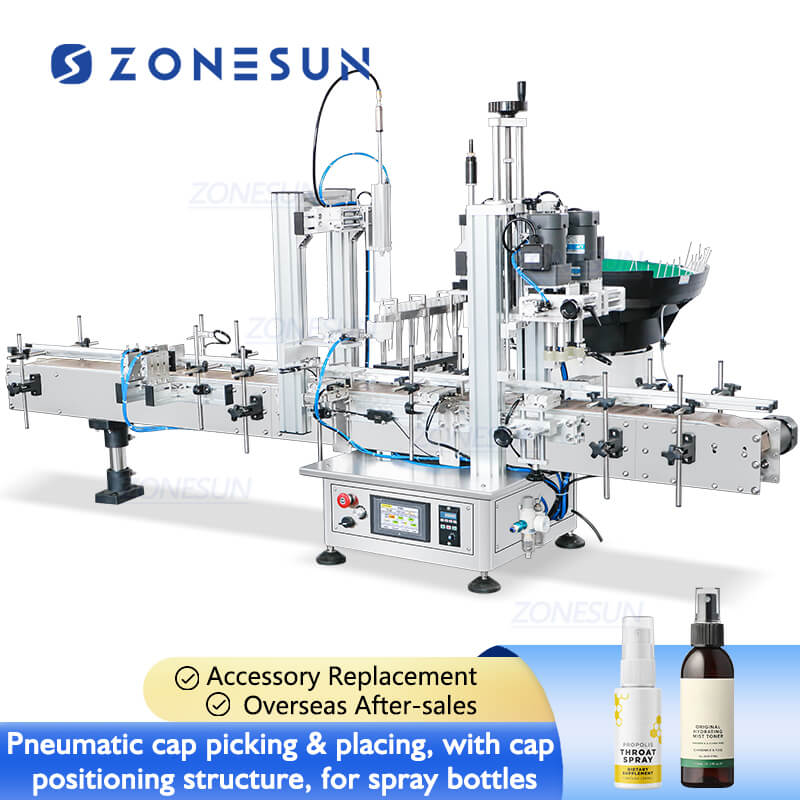
Choosing a Bottle Capping Machine: Key Factors To Consider
Bottle capping machine are a game changer in product packaging. They provide products with a secure, well-fitting lid. It completes the sealing work of products in various industries with higher efficiency and precision, reducing the risk of contamination caused by prolonged exposure of products to the air. And the requirement for cleanliness is a necessary foundation in industries such as food, beverage, pharmaceutical and cosmetics.

What is a Bottle Capping Machine?
A bottle capping machine is a machine or device used to seal bottles or jars. The machine is generally equipped with a capping mechanism to put the bottle cap or cork on the bottle, and then the capping head seals the bottle to ensure the sealing of the bottle and protect the product in the bottle from contamination, leakage and other unstable factors.
Common Types of Bottle Capping Machines
Screw Capping Machine: A rotating mechanism is used instead of turning the threaded bottle cap by hand, which is commonly used for bottled water, shower gel, etc. using plastic bottle caps and metal bottle caps.

Snap Capping Machine: Suitable for bottle caps that are pressed directly into the bottle without threads, using a pressing structure to press the cap after it is placed. Suitable for snap-on bottle caps commonly used in the cosmetics and food industries.

ROPP Capping Machine (Roll-On Pilfer Proof): Rolls aluminum caps onto glass or PET bottles, forming threads during sealing. This type of lid provides a high-quality seal and is tamper-evident. It is often used on products such as spirits and olive oil.

Crimp Capping Machine: Uses crimping jaws to seal aluminum caps, often on small vials. Such as perfume, experimental solution and other high-sealing products, in line with GMP standards.

Bottle capping machines are widely used across various industries, with different machine selection requirements and exploration directions depending on the specific needs of each industry.
When it comes to wine and beverages, a capping machine is pretty much a basic piece of equipment if you’re working with bottled drinks. Seal the bottle right away and you keep the air out — which means your product stays fresh longer and doesn’t lose flavor, something that really matters for things like carbonated drinks and wine.
In food production, a capping machine saves a lot of headaches. One machine can deal with both screw caps and press caps, so whether you’re packing sauces, condiments, or cooking oils, you know the bottles will be sealed properly and meet hygiene requirements.
Pharma is a bit different. Most of the time you’re dealing with small bottles — syrups, oral liquids, vials — and that calls for a turntable capper. These machines let you swap out molds quickly and keep the torque super precise, so you don’t waste time or risk loose seals.
Cosmetics and personal care add another twist. Perfumes, lotions, shampoos — the bottles come in all shapes and heights. That’s why the machines here usually need adjustable and interchangeable molds to keep up with the variety.
More Type Capper🔗
How a Bottle Capping Machine Working
While mechanisms vary, most machines follow this process:
-
Bottle Feeding – Bottles are conveyed to the capping station.
-
Caps Feeding – Caps are oriented and fed via vibratory bowl or cap elevator.
-
Capping Mechanism – Screw, press, roll-on, or crimp process is applied.
-
Torque Control – Ensures consistent sealing strength.
- Bottle Discharge – Sealed bottles exit to labeling or packaging.
Choosing the Right Bottle Capping Machine
When you’re choosing a bottle capping machine, there are a few things to think about.
First up, production speed. Don’t just go for the fanciest fully automatic machine—you want something that matches your output and budget. Manual, semi-automatic, or fully automatic, each has its place.
Next, cap type. Different caps need different machines. Screw caps, snap-on lids, ROPP aluminum caps, pump tops—make sure the machine can handle the ones you actually use.
The size and shape of the bottle are also important. Check the adjustable height and cap diameter range of the machine's capping device to make sure it fits your bottle. If your bottle is an odd-shaped bottle, a clamping mechanism will also be needed to secure the bottle.
Also, think about integration with your line. Your filling machine and labeling machine need to work smoothly with your capping machine—otherwise full automation won’t happen. And don't forget to calculate the size of your machine and the space you have in your workspace.
And of course, you’ve got to think about budget and ROI. It’s not just the price tag—think about how much time it’ll save you and how much product you won’t waste. If you strike the right balance, the investment really pays off.
The perks of picking the right machine are obvious: a good seal keeps your products fresh and tasting right, faster capping speeds up your whole line, and less waste means you’re saving money. On top of that, modern machines are pretty flexible—they can handle different types of caps, so you can switch things up whenever the market demands it.
Maintenance & Best Practices for Bottle Capping Machine
To ensure long-term performance and reliability, every bottle capping machine requires regular maintenance and proper operating practices.
Daily Cleaning
After a machine has been in use for a long time, product residues such as liquid, oil or powder will accumulate on the machine surface, capping system or capping head. If not properly cleaned, it may cause the bottle cap to slip, misalign, or even contaminate the product.
Torque Calibration
One of the most critical factors in capping is torque control. If a cap is tightened too loosely, it risks leakage or tampering; if it’s too tight, it can damage the bottle neck or make it difficult for consumers to open. Regular torque calibration ensures consistent sealing strength and compliance with quality standards.
Lubrication
Capping machines include multiple moving parts—such as gear systems, conveyors, and spindle heads—that must operate smoothly under continuous production. Proper lubrication reduces friction, prevents wear and tear, and lowers the risk of mechanical breakdown. Following the manufacturer’s lubrication schedule and using the recommended lubricants is vital for extending the machine’s service life.
Spare Parts Management
Unexpected downtime can lead to costly production delays. Keeping essential spare parts—such as capping heads, O-rings, belts, and sensors—readily available minimizes disruptions. Choose reliable suppliers to ensure the sustainability of after-sales parts replacement services.
Operator Training
No matter what kind of machine it is, it requires an experienced operator to operate it. Training the operator on how to use the machine helps improve production safety and efficiency.
Conclusion
When you choose a capping machine for your production process, please be sure to consider your products, productivity and future production expansion needs, and choose a machine that meets your current production needs and future business expansion, so as to maximize the investment and production ratio.
If you have any questions about how to choose the bottle packaging equipment that suits you, please provide us with your bottle parameters, production volume requirements and budget, and we will provide you with free machine packaging solution consultation.
Leave a comment