


What Can an Automated Packaging Line Really Automate?
Hear the term “automated packaging line,” and it’s easy to picture products going in one end, finished packages coming out the other — almost no human touch anywhere in between.
Reality looks different.
Automation covers a lot of ground, depending on the product and format. An automated line might handle product feeding, weighing, filling, bag forming, sealing, capping, labeling, coding, inspection, sorting, conveying, cartoning, palletizing — any combination of these.
Not every line automates every step, though. A small manufacturer might only need filling and capping automated. A large facility might run a fully integrated line, start to finish.
So what does automation actually cover here?
1. What Does an Automated Packaging Line Mean?
A group of machines and control systems, working together, handling packaging operations with limited manual intervention. That’s the basic definition.
A typical process: Product Feeding → Measuring → Filling → Sealing → Coding → Inspection → Conveying → Cartoning → Palletizing.
Each stage gets its own dedicated machine or module.
- A weighing system measures the product.
- A filling machine puts product into the container.
- A capping machine closes it.
- A labeling machine applies the label.
- A checkweigher verifies package weight.
- A metal detector checks for contamination.
- A cartoning machine packs individual products into cartons.
- A palletizer organizes cartons onto pallets.
Automation level comes down to how many of these connect and coordinate automatically — not how many machines exist on the floor.
2. Product Feeding Can Be Automated
Getting the product into the machine — that’s stage one, for most lines.
Manual feeding works fine at low volume. Speed things up, though, and it turns inefficient fast.
Different products need different feeding methods.
Granular Products
Rice, cereal, pet food, nuts, snacks — transported via:
- Bucket elevators
- Incline conveyors
- Vibratory feeders
- Z-type conveyors
Powder Products
These often need:
- Screw conveyors
- Vacuum conveying
- Auger feeding systems
Liquid Products
Transferred through:
- Product pumps
- Pipes
- Tanks
- Filling systems
Automated feeding keeps product flowing continuously. No operator loading each package by hand.
3. Measuring and Dosing Can Be Automated
Product’s in the machine. Next question: how much goes into each package?
That’s automatable too.
| Product | Common Dosing System |
|---|---|
| Granules | Multihead weigher |
| Powder | Auger filler |
| Liquid | Pump filling |
| Paste | Piston filling |
| Small solid products | Counting system |
A multihead weigher, for instance, combines readings from several hoppers automatically, landing on a target weight.
No operator measuring each package by hand. The machine handles weighing and feeding on its own.
4. Container or Bag Feeding Can Be Automated
The container itself gets automated supply too.
For bottles: Bottle Unscrambling → Bottle Conveying → Filling.
A bottle unscrambler sorts randomly placed bottles, sends them into the conveyor correctly oriented.
For premade pouches: Pouch Feeding → Pouch Opening → Filling → Sealing.
Either way, operators stop manually placing individual bags or bottles into the machine.
5. Filling Can Be Automated
Filling ranks among the most commonly automated processes.
Depending on the product, machines might use:
- Piston pumps
- Peristaltic pumps
- Magnetic pumps
- Gear pumps
- Servo piston systems
- Gravity filling
- Other dosing systems
The flow: Bottle → Filling Nozzle → Controlled Filling → Filled Bottle.
Machines control filling volume, filling speed, number of heads, filling sequence, nozzle movement — automatically, all of it.
Exact method depends on viscosity, flowability, foaming behavior, target volume — the product dictates the approach.
6. Bag Forming and Sealing Can Be Automated
For roll-film packaging, a VFFS machine handles several steps at once.
Sequence: Film Roll → Bag Forming → Product Filling → Sealing → Cutting.
The machine forms the bag, fills the product, seals it, cuts it — no manual film cutting, no manual bag forming, no manual filling or sealing.
This explains why VFFS machines dominate continuous packaging applications.
7. Capping Can Be Automated
Bottled products get automated closing too.
Sequence: Cap Feeding → Cap Placement → Capping.
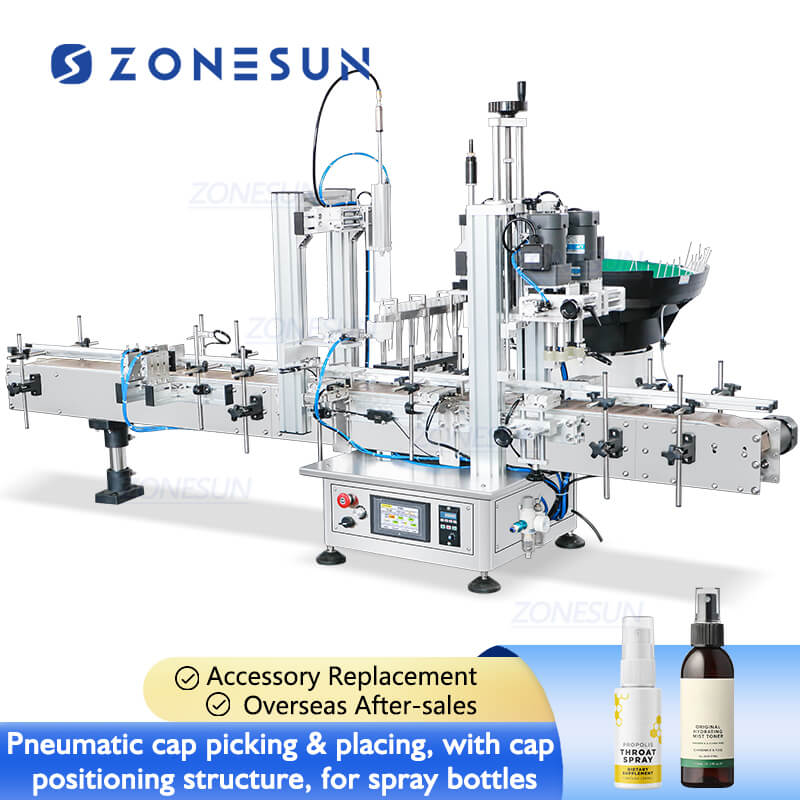
An automatic capping system supplies caps, positions them, places them, applies the right closing force or torque.
Handles a range of products:
- Water
- Juice
- Cosmetics
- Pharmaceutical products
- Sauces
- Household chemicals
Servo-controlled capping adds extra precision — positioning and torque, both dialed in.
8. Labeling Can Be Automated
Container’s filled and closed. Labeling comes next, folded right into the line.
Sequence: Filling → Capping → Labeling.
Automatic labeling machines apply labels to round bottles, flat bottles, boxes, jars, tubes, other containers — format doesn’t much matter.
Automation might cover:
- Product positioning
- Label dispensing
- Label application
- Label detection
- Multiple-side labeling
Different orders needing different labels? The system can integrate with printing or variable-data setups too.
9. Date and Batch Coding Can Be Automated
Lines print information automatically — production date, expiration date, batch number, lot number, serial number, barcode, QR code.
Common technologies:
- Inkjet printing
- Thermal transfer printing
- Laser marking
Synchronized with the packaging machine: Product → Packaging → Coding → Finished Package.
No manual printing, no manual application per package. The coding system runs during production instead.
10. Inspection Can Be Automated
Automation doesn’t stop once the package seals.
Finished packages get automatically inspected too — checking:
- Weight
- Label presence
- Label position
- Cap presence
- Package appearance
- Metal contamination
- Barcode
- Product position
A typical flow: Packaging → Checkweigher → Metal Detector → Reject System.
Out of spec? The system removes it automatically.
This matters beyond just speed. It’s about consistency — catching what shouldn’t ship, before it ships.
11. Rejecting Defective Packages Can Be Automated
Say inspection flags a package — underweight, missing a cap, missing a label, metal contamination, wrong position.
No manual removal needed. An automatic reject system pulls it from the line.
Flow: Inspection → Defect Detected → Reject Signal → Product Removed.
Good product keeps moving. Defective product gets separated, automatically, without slowing the line down.
12. Conveying Between Machines Can Be Automated
Material transfer gets overlooked constantly, but it matters.
Individual machines running automatically means little if an operator still moves products between them by hand.
Conveyors bridge the stages: Filling Machine → Conveyor → Capping Machine → Conveyor → Labeling Machine.
Conveyor design shifts with product shape, weight, production speed, factory layout, machine spacing — no single design fits everything.
Think of the conveyor system as the connective tissue between machines, essentially.
13. Cartoning Can Be Automated
After primary packaging, products often need cartons.
A cartoning machine automates:
- Carton forming
- Product insertion
- Leaflet insertion
- Carton closing
- Carton sealing
Flow becomes: Primary Packaging → Cartoning → Carton Sealing.
Especially relevant for industries needing secondary packaging:
- Pharmaceuticals
- Cosmetics
- Food
- Consumer goods
14. Case Packing and Palletizing Can Be Automated
Automation extends past individual cartons too.
A line might run: Products → Cartons → Cases → Pallets.
Case packers place cartons or products into shipping cases automatically. Palletizing systems then arrange cases into predefined patterns.
A robotic palletizer, for instance, picks up cases, moves them to the pallet, places them per the programmed pattern, repeats — over and over, no fatigue.
Cuts out repetitive manual lifting at the end of the line, which matters more than it sounds.
15. Can Packaging Lines Automate Quality Control?
Yes — though specific capability depends on the equipment installed.
Modern lines combine several inspection technologies.
Weight Inspection
Checkweigher — checks whether the finished package hits target weight.
Metal Detection
Metal Detector — detects certain unwanted metal contaminants.
Vision Inspection
Machine Vision System — inspects label position, cap presence, product appearance, print quality, barcode or QR code.
Combine these, and quality control becomes genuinely comprehensive — not just a single checkpoint.
16. Can One Packaging Line Automate Everything?
Not necessarily. Important point, this one.
Automated doesn’t mean zero human involvement — that assumption trips people up constantly.
Operators still handle:
- Material replenishment
- Product preparation
- Machine setup
- Cleaning
- Maintenance
- Quality checks
- Changeover
- Troubleshooting
A machine might package 100 bottles a minute, sure — but someone still refills caps, refills packaging materials, periodically.
Automation’s real goal: cut repetitive manual work. Not eliminate every human task on the floor.
17. Different Levels of Packaging Automation
Think of automation as tiers.
Level 1: Manual
Operators handle most operations by hand. Feeding → Filling → Capping → Labeling.
Level 2: Semi-Automatic
Some steps automate, others stay manual. Example: Manual Feeding → Automatic Filling → Manual Capping.
Level 3: Integrated Automatic Line
Multiple machines connect. Automatic Feeding → Filling → Capping → Labeling → Inspection.
Level 4: Highly Automated Line
Adds automatic feeding, inspection, reject systems, cartoning, case packing, palletizing, production data — the whole chain, coordinated.
Right level depends on volume, labor costs, product type, budget — no universal answer here.
18. What Determines How Much You Should Automate?
Not every manufacturer needs the most automated system on the market.
Production Volume
A few hundred packages a day? Full automation probably isn’t necessary. Tens of thousands a day? Automation pays off, usually significantly.
Labor Availability
Repetitive work eating up many operators — that’s where automation delivers real value.
Product Characteristics
Fragile, sticky, dusty, liquid, irregular — these often demand specialized automation, not generic equipment.
Packaging Format
Bottles, pouches, jars, tubes, cartons — different formats, different equipment. One system rarely covers all of them.
Changeover Frequency
Many SKUs? Flexibility and quick changeover often matter more than raw speed.
19. A Typical Fully Automated Packaging Line
A complete line might run:
Raw Product Feeding → Weighing/Dosing → Filling → Sealing/Capping → Date Coding → Labeling → Checkweighing → Metal Detection/Vision Inspection → Automatic Reject → Cartoning → Case Packing → Palletizing
Not every project needs every stage, though. A customized line gets built around the manufacturer’s actual product and production requirements — not a generic template.
20. The Role of Integration in Packaging Automation
Individual machines are only part of the picture.
Real value comes from integration.
Filling machine stops, and the upstream feeding system may need to stop too. Labeling machine flags a problem, and downstream conveyors need to respond accordingly.
That requires communication between machines. A control system coordinates:
- Machine status
- Conveyor speed
- Product detection
- Production counts
- Alarms
- Inspection results
- Reject signals
The result: a coordinated production system. Not just a pile of independent machines sitting next to each other.
Conclusion
An automated packaging line covers far more than simply filling a package.
Depending on the application, automation spans:
- Product feeding
- Weighing and dosing
- Container or pouch feeding
- Filling
- Bag forming
- Sealing
- Capping
- Labeling
- Date and batch coding
- Inspection
- Automatic rejection
- Conveying
- Cartoning
- Case packing
- Palletizing
The best line, though, isn’t necessarily the one packed with the most machines.
Right solution automates the most valuable, repetitive processes — matched to the product, format, volume, labor needs, and future production plans. Not more automation for automation’s sake.
Some manufacturers only need filling and capping automated. Others benefit more from a fully integrated system, product feeding through palletizing.
The real question isn’t “How much automation can we add?” It’s “Which parts of our packaging process should we automate?”
That’s where a customized packaging solution makes the real difference.
Tinggalkan komentar